If you want search engines to better understand your website content, schema markup is one of the most effective SEO techniques you can use.
According to Google, structured data helps search engines understand the context of a page and improve how it appears in search results. Websites that use schema markup correctly often gain better visibility and higher click-through rates through rich snippets.
For businesses working with a professional seo agency Houston, implementing schema markup is now a key part of modern SEO strategies and AI search optimization.
What Is Schema Markup in SEO?
Schema markup is a form of structured data vocabulary created by Schema.org. It helps search engines understand what your content means instead of only reading the text on the page.
For example, if you publish a recipe page, schema markup can tell Google:
- Cooking time
- Ingredients
- Calories
- Ratings
- Recipe author
Without schema markup, Google may still understand some information, but structured data makes it easier and more accurate. In simple terms, schema markup gives search engines additional context about your content.
How Does Schema Markup Work?
Schema markup works by adding structured data code to your website pages. This code is usually written in JSON-LD format, which Google officially recommends.
When search engine crawlers visit your website, they read the schema markup and use that information to create enhanced search results called rich snippets.
These rich results may include:
- Star ratings
- FAQs
- Product prices
- Business information
- Breadcrumbs
- Event details
This improves how your page appears in search results and can increase click-through rates.
Why Is Schema Markup Important for SEO?
Schema markup improves communication between your website and search engines. While it is not a direct ranking factor, it supports several SEO benefits.
1. Better Search Visibility
Rich snippets make your listings more attractive in search results. A result with ratings, FAQs, or product information usually stands out more than a standard blue link.
2. Improved Click-Through Rate (CTR)
Enhanced search results often get more clicks because users can quickly understand what the page offers before visiting it.
3. Supports AI Search and Voice Search
AI-powered search engines and voice assistants rely heavily on structured data to understand content. Schema markup helps your content become more accessible for:
- Google AI Overviews
- Voice assistants
- Generative AI search engines
4. Better Content Understanding
Schema markup helps Google understand:
- The purpose of your page
- Important entities
- Relationships between topics
This can strengthen topical relevance and improve semantic SEO performance.
Businesses working with a digital marketing agency houston often use schema markup to improve local SEO, product visibility, and AI search optimization.
Types of Schema Markup
Different schema types serve different purposes. Choosing the right one depends on your website content.
1. Organization Schema
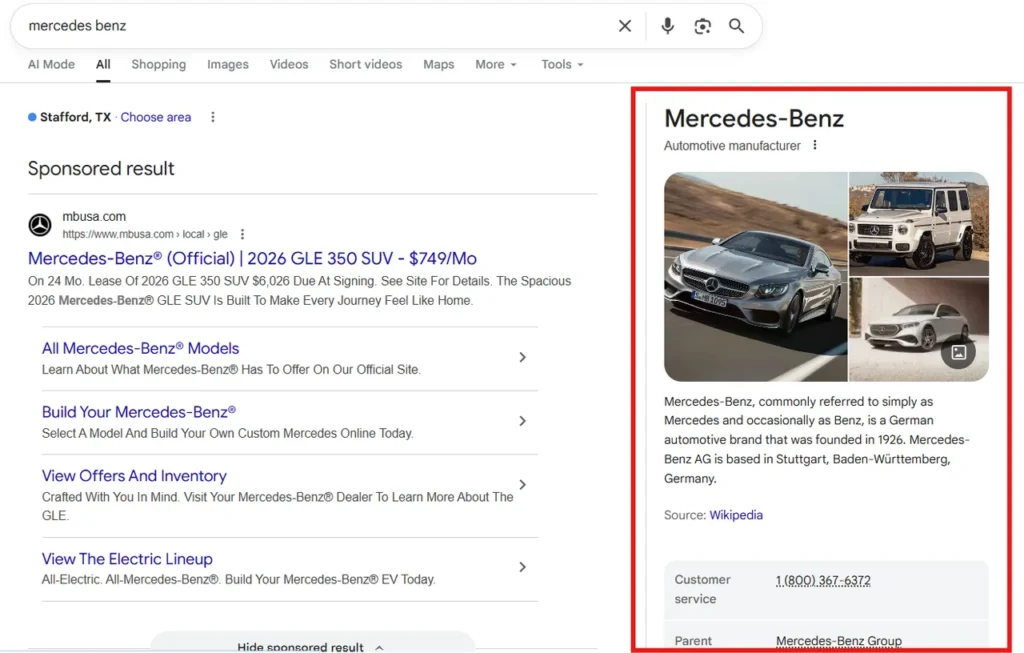
Organization schema helps search engines understand important information about your business or brand. It is commonly added to the homepage and supports brand recognition in Google Search.
Organization schema can include:
- Business name
- Logo
- Contact information
- Social media profiles
- Customer support details
- Company location
This schema helps Google connect your website with your brand entity and can improve your Knowledge Panel visibility in search results. It is especially important for businesses building authority and trust online.
2. Article Schema
Article schema is designed for blog posts, news articles, and long-form content. It provides search engines with detailed information about published content and its creator.
Article schema usually includes:
- Author name
- Publish date
- Updated date
- Headline
- Featured image
- Article description
This schema helps search engines understand the topic and freshness of your content. It can also improve eligibility for rich results in Google News and AI-powered search experiences.
3. Product Schema

Product schema is essential for e-commerce SEO because it helps product pages appear with rich information directly in search results.
Product schema can display:
- Product pricing
- Availability status
- Product ratings
- Customer reviews
- Discounts
- Shipping details
When implemented correctly, product schema can increase click-through rates because users can view key product information before even visiting the page. It also improves shopping search visibility and supports Google Merchant integrations.
4. Review Schema
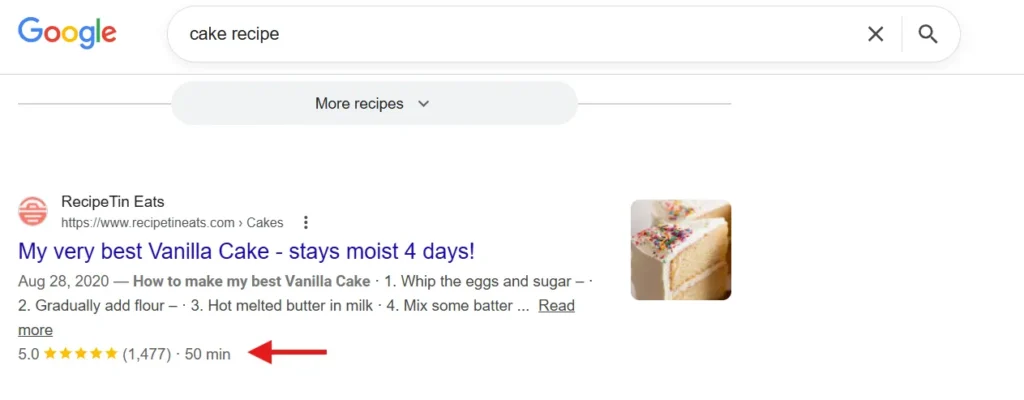
Review schema allows websites to showcase ratings and customer feedback in search results. This schema is commonly used for products, services, tools, recipes, and local businesses.
Review schema may include:
- Star ratings
- Reviewer name
- Review count
- Average rating score
Rich review snippets make listings stand out visually and can improve user trust. However, Google has strict guidelines, so reviews must be genuine and visible on the page itself.
5. FAQ Schema
FAQ schema helps search engines understand question-and-answer content on a webpage. It allows FAQs to appear directly beneath your search listing, taking up more space in the SERPs.
FAQ schema helps display:
- Common customer questions
- Direct answers
- Helpful informational content
This schema improves user experience by answering questions quickly and can increase organic click-through rates. FAQ schema is commonly used on service pages, product pages, and blog posts.
6. Local Business Schema
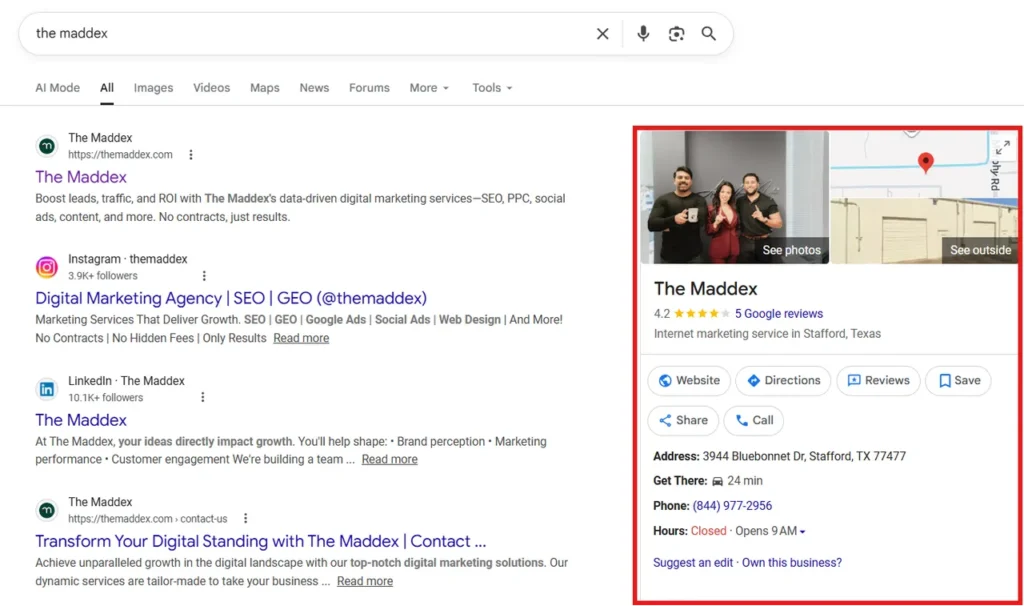
Local business schema is critical for businesses targeting local customers. It helps search engines understand location-specific business information and improves local SEO performance.
Local business schema can include:
- Business address
- Opening hours
- Phone number
- Customer reviews
- Geo location data
- Service areas
This schema improves visibility in local search results, Google Maps, and “near me” searches. It is especially useful for restaurants, agencies, clinics, stores, and service-based businesses.
7. Breadcrumb Schema
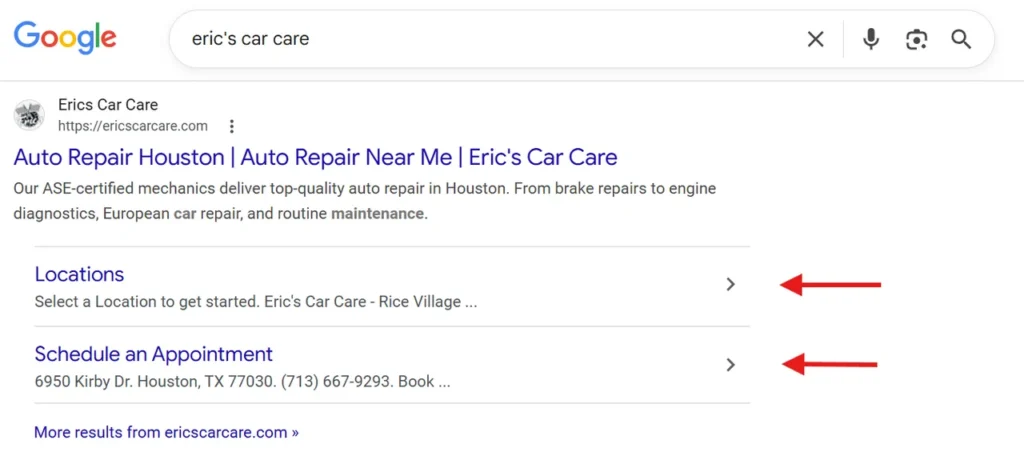
Breadcrumb schema helps search engines understand your website structure and page hierarchy. It also improves navigation for users.
Breadcrumb schema typically shows:
- Category structure
- Parent pages
- Navigation paths
Instead of displaying long URLs in search results, Google may show clean breadcrumb navigation. This improves user experience and helps search engines crawl your site more efficiently.
What Is the Recommended Format for Implementing Schema Markup?
Google recommends using JSON-LD format for schema markup implementation.
There are three main formats:
- JSON-LD
- Microdata
- RDFa
JSON-LD is preferred because:
- It is easier to implement
- Cleaner to manage
- Supported directly by Google
- Less likely to break page design
Most SEO professionals use JSON-LD because it simplifies structured data implementation.
How to Add Schema Markup to Your Website
Implementing schema markup is easier than many website owners think.
1. Choose the Correct Schema Type
Start by identifying the purpose of your page.
Examples:
- Blog post → Article schema
- Product page → Product schema
- Business homepage → Organization schema
You can explore schema types at Schema.org.
2. Generate the Schema Markup Code
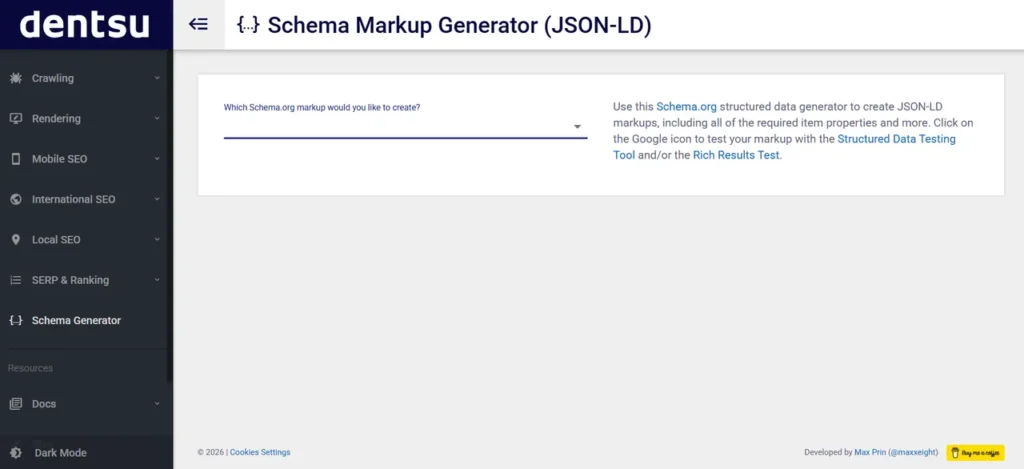
You can create schema markup using:
- Google Structured Data Markup Helper
- Schema markup generators
- SEO plugins
- AI schema tools
Most tools automatically generate JSON-LD code.
3. Add the Code to Your Website
Place the generated schema markup in:
- The page header
- HTML body
- CMS schema fields
- SEO plugin settings
Popular CMS platforms like WordPress offer plugins that simplify this process.
4. Validate Your Schema Markup
After implementation, test your schema using:
- Google Rich Results Test
- Schema Markup Validator
Validation helps identify syntax issues and missing properties.
5. Monitor Performance in Google Search Console
Google Search Console shows:
- Rich result performance
- Schema errors
- Enhancement reports
Regular monitoring helps maintain structured data quality.
Best Practices for Schema Markup in AI Search
Search engines are evolving rapidly with AI integration. Following schema best practices can improve future search visibility like GEO.
1. Match Schema With Visible Content
- Always ensure the structured data matches the actual content displayed on the page. Google may ignore or penalize misleading schema markup that users cannot see.
- For example, only use FAQ schema if the questions and answers are visibly present on the webpage.
2. Avoid Spammy Markup
- Do not add fake reviews, inaccurate ratings, or unrelated schema types just to gain rich snippets. Google’s algorithms can detect manipulative structured data practices.
- Using clean and honest schema markup improves trustworthiness and long-term SEO performance.
3. Use Entity-Based Structured Data
- Connect your content with recognizable entities such as organizations, authors, products, locations, and services to improve semantic SEO signals.
- Entity-based schema helps AI search engines better understand relationships between topics, brands, and content.
4. Keep Schema Updated
- Regularly review and update your schema markup whenever page content changes, especially for products, business details, and reviews.
- Outdated structured data can create validation errors and reduce search engine trust in your website information.
5. Combine Schema With High-Quality Content
- Schema markup works best when paired with helpful, user-focused content that demonstrates experience, expertise, authority, and trustworthiness (EEAT).
- Strong technical SEO, internal linking, and quality content improve the overall effectiveness of structured data implementation.
How to Check Schema Markup on Your Website
Testing schema markup after implementation is essential because even small errors can prevent your structured data from appearing in Google rich results.
1. Google Rich Results Test
Google Rich Results Test is the official tool used to check whether your page qualifies for rich results in Google Search. It analyzes your structured data and highlights any warnings or errors that may affect eligibility.
You can test:
- A live webpage URL
- A code snippet
- Mobile and desktop versions
The tool also shows which rich result types your page supports, such as:
- Articles
- Products
- Reviews
- Breadcrumbs
- FAQs
How to Use Google Rich Results Test
- Open the Google Rich Results Test tool
- Enter your page URL or schema code

- Click “Test URL”
- Wait for Google to analyze the structured data
- Review detected items, warnings, and errors
- Fix issues and retest the page
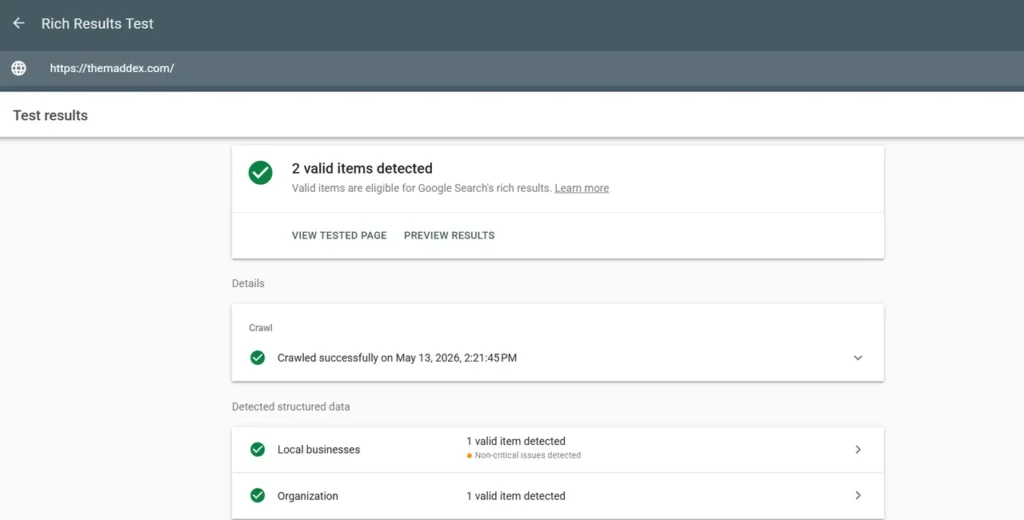
Google recommends using this tool to preview how rich results may appear in search and to identify schema implementation problems before indexing.
2. Schema Markup Validator
Schema Markup Validator is another important testing tool that validates Schema.org structured data syntax. Unlike Google Rich Results Test, this validator focuses on checking whether your schema code is technically correct.
It helps identify:
- Invalid JSON-LD syntax
- Missing required properties
- Incorrect schema nesting
- Unsupported schema types
This tool is especially useful for developers and SEO professionals who manually create schema markup.
How to Use Schema Markup Validator
- Open the Schema Markup Validator tool
- Paste your schema code or webpage URL
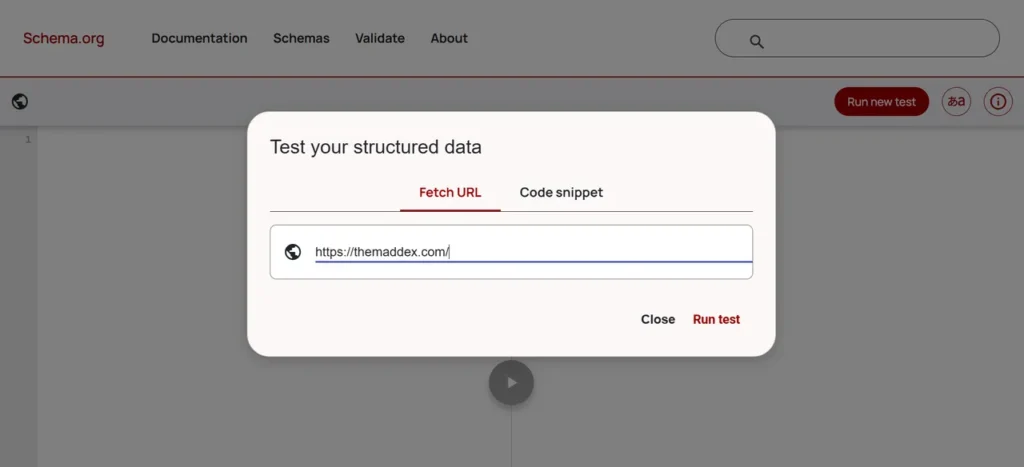
- Run the validation test
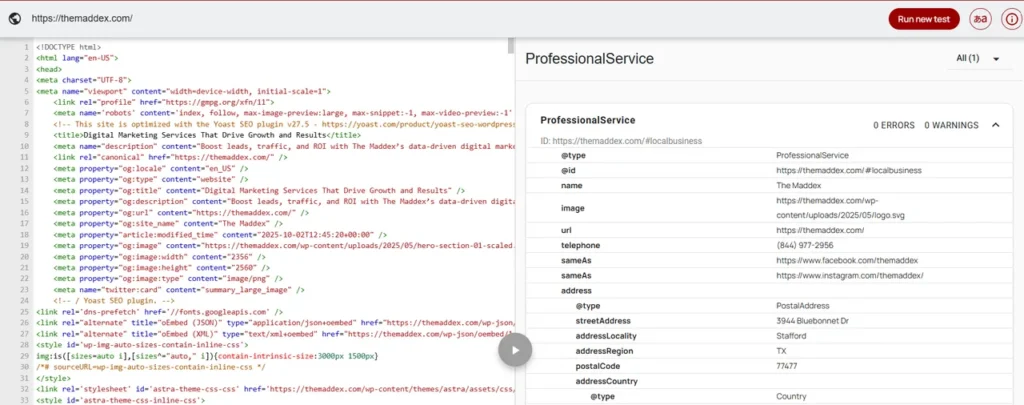
- Review syntax errors and warnings
- Correct invalid fields and retest
Google also recommends using Schema Markup Validator for generic Schema.org validation beyond Google-specific rich result testing.
3. Google Search Console
Google Search Console helps monitor schema markup performance after your pages are indexed. It provides enhancement reports that show how Google reads your structured data across your entire website.
Search Console reports commonly track:
- FAQs
- Products
- Breadcrumbs
- Articles
- Local Business schema
- Review snippets
These reports help identify pages with:
- Valid structured data
- Warnings
- Critical errors
- Indexing issues
How to Check Schema Reports in Google Search Console
- Log into Google Search Console
- Select your website property
- Navigate to “Enhancements”
- Open the specific schema report
- Review valid pages, warnings, and errors
- Fix issues and request validation
Google Search Console is valuable because it continuously monitors your structured data performance and alerts you whenever issues appear.
Does Schema Markup Help SEO and AI Visibility?
Yes, schema markup supports SEO performance in multiple ways.
Although Google has stated that structured data is not a direct ranking factor, it improves:
- Rich snippet eligibility
- Click-through rates
- Search appearance
- AI search understanding
- Semantic relevance
As AI search engines continue evolving, structured data will likely become even more important for visibility and content discovery. Websites that invest in schema markup today are better prepared for the future of search.
Maximize Rich Snippets and SEO Visibility With The Maddex
Understanding what is schema markup is essential for any modern SEO strategy. Structured data helps search engines understand your content, improves search visibility, and supports AI-powered search experiences.
From rich snippets to voice search optimization, schema markup plays a major role in helping websites stand out in competitive search results.
If you want expert help implementing structured data, improving technical SEO, and growing your online visibility, The Maddex provides professional SEO and digital marketing services designed to help businesses scale their search performance effectively.