If you are trying to grow your business online, understanding seo vs sem is essential because both strategies drive visibility on Google, but in very different ways.
In simple terms, seo vs sem is the comparison between earning organic traffic through optimization and getting instant visibility through paid ads.
According to research by major industry sources like AMA, search marketing continues to dominate digital advertising budgets because users heavily rely on search engines to make buying decisions. If you are working with a digital marketing agency Houston, or planning to hire experts for online growth, this blog will help you choose the right strategy for your business goals.
What is SEO?
SEO (Search Engine Optimization) is the process of optimizing your website to rank organically on search engines like Google. When comparing seo vs sem, SEO focuses on unpaid traffic that builds over time.
SEO is a core part of sem strategies because it improves visibility without paying for every click.
Types of SEO
- On-Page SEO: Optimizing content, keywords, titles, and meta descriptions
- Off-Page SEO: Building backlinks and authority signals
- Technical SEO: Improving site speed, indexing, and mobile performance
What is SEM?
SEM (Search Engine Marketing) refers to paid advertising on search engines, mainly through Google Ads. SEM is focused on immediate visibility through paid search results.
SEM is also widely known as paid search advertising because businesses pay for each click.
Key Components of SEM
- Keyword bidding and auction-based pricing
- Audience targeting (location, demographics, interests)
- Ad copy creation and optimization
- Conversion tracking and performance monitoring
Search Engine Marketing Examples
Common search engine marketing examples include:
- Google Search Ads for “buy shoes online”
- Local service ads for “plumber near me”
- Retargeting ads shown to previous website visitors
SEM is highly effective, but it requires expertise, when it’s supported by a strong PPC agency Houston, it can optimize ad spend and improve ROI quickly.
Read more: How Google Ads Agencies Contribute to Business Growth
Difference Between SEO and SEM
When analyzing seo vs sem, it’s important to understand how each factor impacts your marketing performance. Both strategies serve different purposes in digital marketing, and each has unique strengths depending on your business goals.
1. Traffic Type
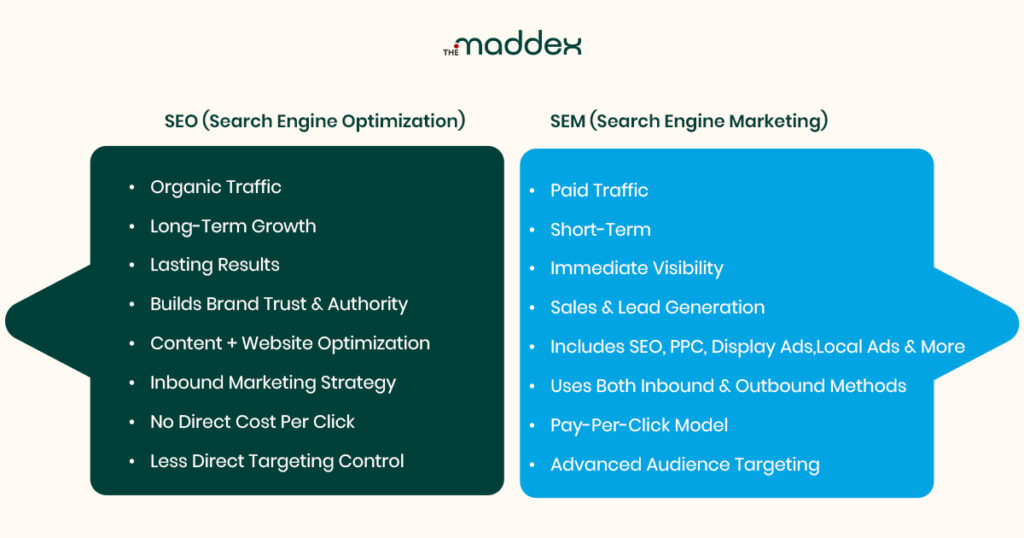
SEO focuses on organic traffic, meaning users find your website naturally through search results without paid promotion. This traffic builds over time and is highly sustainable.
SEM, on the other hand, drives paid traffic through ads. You pay for each click, but you get instant visibility at the top of search results. This makes SEM ideal for immediate campaigns and promotions.
2. Speed
One of the biggest differences in seo vs sem is speed. SEO takes time because search engines need to crawl, index, and trust your content before ranking it.
SEM delivers instant results as soon as your ads go live. This is why businesses often use SEM for product launches, seasonal offers, or urgent lead generation.
3. Cost: Investment
SEO requires investment in content creation, optimization, and technical improvements. While it doesn’t charge per click, it demands time and consistency.
SEM operates on a pay-per-click model, meaning you are charged every time someone clicks your ad. This gives control over the budget but can become expensive depending on the competition.
4. Longevity
SEO is a long-term strategy. Once your pages rank, they can continue to bring traffic for months or even years with minimal ongoing cost.
SEM stops immediately when your budget runs out. Once ads are paused, the traffic disappears, making it a short-term visibility tool.
5. Trust Factor
Users tend to trust organic results more because they are earned rather than paid for. This is why SEO often builds stronger brand credibility over time.
SEM still plays a crucial role, especially in competitive industries, but users are generally aware that ads are paid placements. However, well-optimized ads can still drive high engagement and conversions.
6. Conversion Rate
Conversion rates in seo vs sem depend heavily on user intent. SEO traffic often converts well for informational and research-based queries because users trust organic content.
SEM, however, tends to convert better for high-intent commercial searches, where users are ready to buy or take immediate action. This is why paid search is powerful for driving direct sales and leads.
In digital marketing, both channels serve different but complementary purposes.
How Does SEO Work?
SEO works by helping search engines understand and rank your website for relevant searches. It starts with keyword research and creating high-quality content optimized with the right headings, titles, and keywords to match user intent.
SEO also includes improving website speed, mobile experience, and technical performance while building backlinks from trusted websites.
Since SEO takes time and consistency to generate long-term organic traffic, many businesses partner with an SEO agency Houston for professional optimization and growth.
How Does SEM Work?
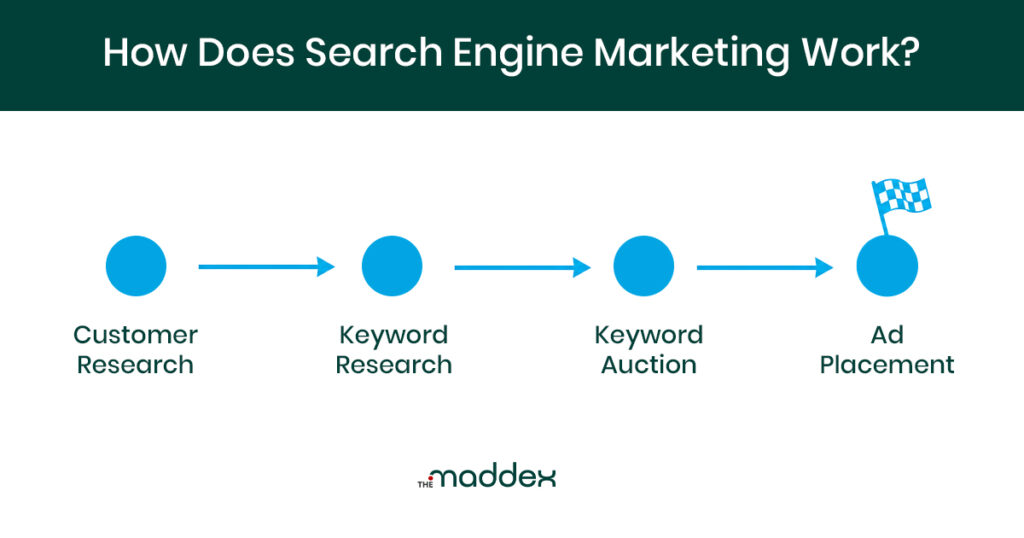
SEM works through paid advertising platforms like Google Ads, where businesses pay to appear at the top of search engine results for targeted keywords. Unlike SEO, which takes time to build rankings organically, SEM delivers immediate visibility and faster traffic.
SEM Process
- Selecting target keywords
- Bidding on keywords in real-time auctions
- Creating ad copies that attract clicks
- Setting audience targeting (location, device, intent)
- Optimizing based on performance data
In digital marketing, SEM is ideal for businesses that need fast leads, seasonal campaigns, or product launches.
SEO vs SEM Strategy: Cost, ROI, and Performance
Choosing the right seo vs sem strategy depends on your business goals, competition, budget, and how quickly you need results. While SEO focuses on building long-term organic growth, SEM is designed to generate immediate visibility and faster conversions.
1. Cost Differences
- SEO: Lower long-term cost but requires time investment
- SEM: Higher ongoing cost due to paid clicks
2. ROI Differences
- SEO delivers compounding ROI over time
- SEM delivers immediate but temporary ROI
3. When to Use Each
- Use SEO for long-term authority building
- Use SEM for instant traffic and conversions
- Combine both for maximum SERP dominance
In many cases, businesses see the best results when using seo and sem strategies together rather than choosing one.
How SEO and SEM Work Together in Digital Marketing
Instead of treating seo vs sem as competing strategies, smart marketers use both together to create a stronger and more balanced search presence.
- One major advantage of combining both is the ability to dominate search engine results pages through both paid ads and organic listings. This increases visibility and improves brand credibility since users see your business in multiple positions.
- SEM also provides valuable keyword and conversion data that can be used to refine your SEO strategy. At the same time, businesses can retarget users who initially discovered them through SEO with SEM ads, increasing the chances of conversion.
Overall, this integrated approach improves performance across the funnel and leads to higher conversion rates. That’s why modern seo and sem in digital marketing strategies focus on using both channels together instead of choosing one over the other.
SEO vs SEM: Which Strategy is Right for Your Business?
Choosing between seo vs sem is not a one-size-fits-all decision. The right approach depends on your business stage, goals, competition level, and how quickly you need results.
- Startups: SEM for quick visibility
- Established brands: SEO for authority building
- E-commerce: Both SEO + SEM for maximum reach
- Local businesses: SEO + targeted SEM campaigns
If you are unsure which direction to take, working with a professional digital marketing partner like The Maddex can help you avoid wasted budget and choose the right strategy mix.
SEO vs SEM – Choosing the Right Strategy with The Maddex
In the end, seo vs sem is not about picking one over the other, but understanding how both work together to create stronger and more scalable digital growth.
For most businesses, combining both strategies leads to better results in terms of leads, conversions, and overall search visibility.
If you need expert support across SEO, paid ads, branding, and full-funnel marketing, The Maddex helps businesses build performance-driven digital systems. Ultimately, mastering seo vs sem ensures you stay competitive in modern search marketing.