If you’ve ever wondered how many SEO keywords should I use in a single page or blog post, you’re not alone. Striking the right balance is crucial for ranking well without falling into keyword stuffing. Understanding the best number of keywords for SEO helps you create content that satisfies search engines while still delivering real value to readers.
In this blog, we’ll break down how keyword strategy works, what actually impacts rankings, and how to choose the right number of keywords for maximum visibility and performance. If you are searching for a reliable SEO agency Houston, The Maddex can help you implement these strategies effectively to boost your traffic, improve rankings, and generate quality leads.
The Quick Answer (TLDR)
You should typically focus on 1 primary keyword and 2–4 closely related secondary keywords per page or blog post.
That’s usually the sweet spot for SEO, enough to signal relevance to search engines without over-optimizing or diluting your content’s focus. Aim for a keyword density of around 0.5%–1% for your primary keyword, just enough to reinforce the topic naturally without keyword stuffing.
For best results, place your primary keyword in:
- The title tag
- The H1 heading
- The first 100 words
- At least one subheading (H2/H3)
- The meta description
- The URL
- And naturally, throughout the body content
Secondary keywords should be woven naturally into subheadings and body text where relevant. For even better results, it’s recommended to work on keyword clustering for secondary keywords, which we will discuss later in the blog.
In fact, a study by Rankability analyzing 1,536 Google search results found no consistent positive correlation between keyword density and rankings; the top 10 results had an average keyword density of only ~0.04%. This demonstrates that quality, clarity, and search intent matter far more than repeating a keyword excessively.
Read Related: How to Do Keyword Research for SEO
How Much Keyword Density Is Good for SEO?
In 2026, the ideal keyword density isn’t a strict number you must hit, search engines no longer use keyword density as a ranking metric on its own. Instead, they focus on content relevance, intent, and semantic context. That said, a general guideline many SEO experts still follow is:
- Primary keyword: ~0.5%–1% of total word count
- Secondary/related keywords: Naturally distributed, without forcing placement
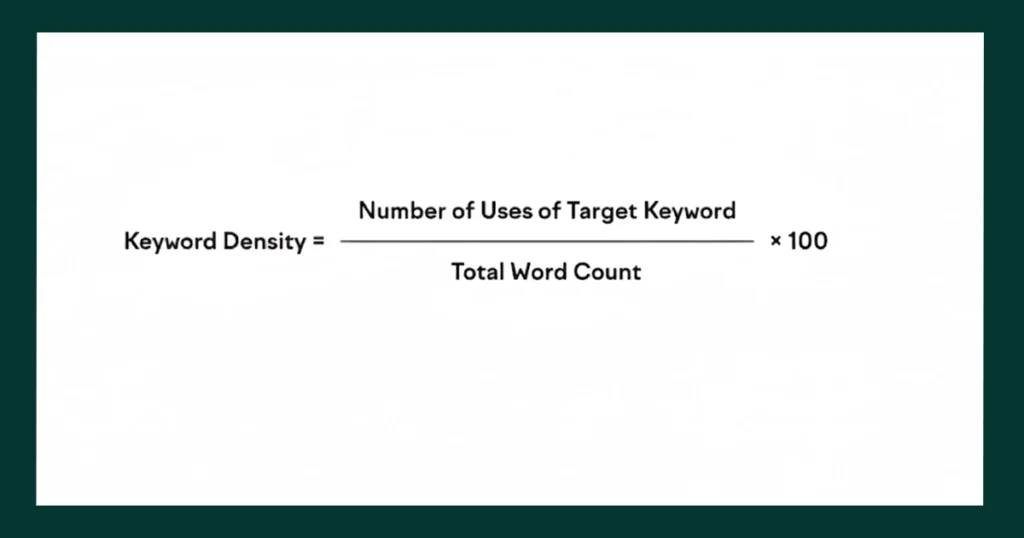
For example, in a 1,000-word article, using your primary keyword about 5–10 times is usually sufficient, as long as it’s contextually relevant and flows naturally. You can also use the keyword density formula to calculate your keyword density, see the image below.
Recommended Keyword Usage by Word Count in 2026
In 2026, instead of aiming for an exact keyword density percentage, it’s more practical to think in terms of natural frequency based on your total word count. Here’s a detailed breakdown of how many times you should use your primary keyword based on different content lengths:
- 500 words → 3–5 times
- 800 words → 4–8 times
- 1,000 words → 5–10 times
- 1,500 words → 8–15 times
- 2,000 words → 10–20 times
- 3,000 words → 15–30 times
Note: Always use your keyword naturally throughout the article. There is no fixed number to follow. Focus on writing content that sounds natural, avoids keyword stuffing, and delivers real value to the reader.
If you want professional guidance to optimize your content and implement effective SEO strategies, The Maddex can help. We create keyword-rich, user-friendly content that ranks well and drives results for your business.
How Google Understands Keywords Today
In 2026, Google no longer relies on simple keyword matching to rank content. Instead, it uses advanced AI systems, natural language processing (NLP), and machine learning to understand the meaning, context, and intent behind searches. This shift has completely changed how keyword optimization works. Let’s break down major concepts shaping modern SEO:
1. Semantic Search
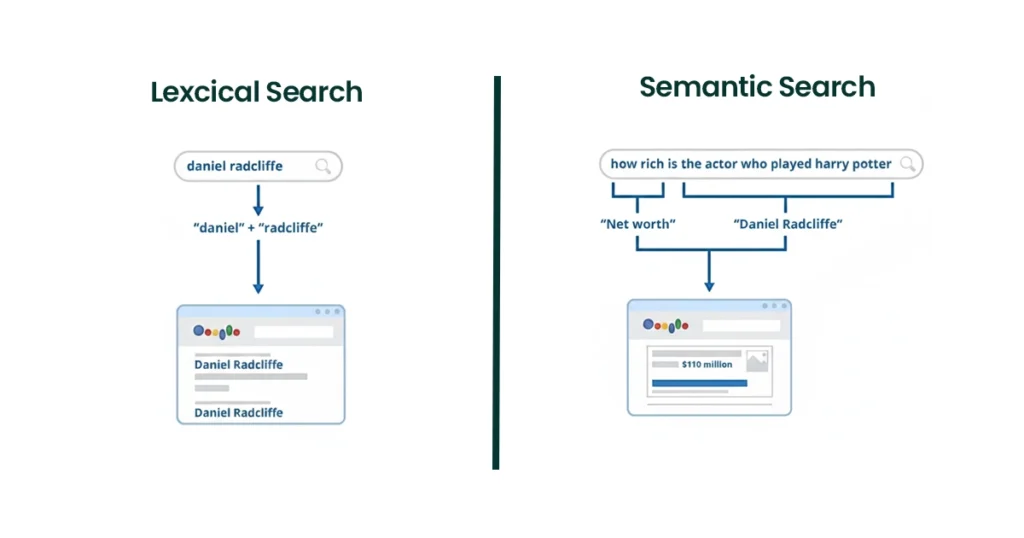
Semantic search means Google looks beyond exact keyword matches and tries to understand the intent and context behind a query.
For example, if someone searches:
- “best laptop for remote work”
Google understands related concepts like:
- battery life
- lightweight design
- webcam quality
- performance
- work-from-home setup
Even if your article doesn’t repeat the exact keyword many times, Google can rank it well if it covers the topic comprehensively and naturally includes related terms.
Today, Google connects:
- Synonyms
- Related phrases
- Topic associations
- Entities (brands, products, people, locations)
- User behavior patterns
This means repeatedly stuffing the same keyword is unnecessary. What truly matters is topical depth and contextual relevance. See the image below to better understand how Google interprets queries using semantic search.
2. Keyword Clustering
Keyword clustering is a modern SEO strategy where you group multiple closely related keywords under one comprehensive piece of content instead of creating separate, thin articles for each variation.
Search engines today understand that many keywords share the same intent. So instead of treating:
- how many SEO keywords should I use
- best number of keywords for SEO
- ideal keyword density
- keyword usage per blog post
as completely separate topics, Google sees them as part of the same broader subject: keyword optimization strategy.
If you create four short articles targeting each keyword separately, you risk:
- Competing with yourself (keyword cannibalization)
- Publishing thin or repetitive content
- Diluting topical authority
- Confusing search engines about which page to rank
Instead, clustering brings them together into one strong, in-depth guide that answers all related questions in a structured way.
Read Related: What keywords Does My Site Rank For
So, What Should You Do in 2026?
In 2026, SEO is no longer about obsessing over exact keyword density or creating a separate page for every keyword variation. It’s about building strong, intent-driven, topic-focused content that fully satisfies the user.
- Think in Topics, Not Just Keywords: Stop creating separate pages for every slight variation. Instead, group related keywords together and build one comprehensive, authoritative guide that fully covers the subject.
- Prioritize Search Intent: Prioritize search intent by understanding whether the user wants information, comparison, or action, because when your content perfectly matches their intent, better rankings naturally follow.
- Use Keywords Naturally: Use 1 primary keyword and a few related variations. Place them strategically (title, headings, introduction, body), but never force them. Natural flow matters more than hitting an exact percentage.
- Go Deep, Not Wide: Cover supporting questions, examples, FAQs, and related subtopics. Depth builds authority. Thin content no longer works.
- Write for Humans First: Engagement signals matter. If your content is clear, helpful, and easy to read, Google’s algorithms will reward it. If it sounds robotic or over-optimized, it won’t perform well.
So in summary, you should use your keywords multiple times throughout the content, as we discussed earlier, but avoid overusing them to the point that it creates excessive keyword density. Focus on placing them naturally in key areas like the title, headings, introduction, and body, so they reinforce the topic without making the content feel forced or robotic.
Boost Your SEO and Lead Generation with The Maddex
In 2026, mastering SEO isn’t about cramming keywords; it’s about creating intent-driven, topic-focused content that provides real value to your audience. Understanding how many SEO keywords should I use and the best number of keywords for SEO ensures your content ranks without feeling forced, while keyword clustering, semantic relevance, and search intent help you build authority and improve user experience.
If you’re searching for a trusted digital marketing agency Houston that can help you generate leads and optimize your SEO strategy effectively, The Maddex has the expertise to guide you. Our team specializes in creating comprehensive, high-performing SEO campaigns that boost visibility, attract traffic, and convert visitors into customers.