AI-powered search platforms like Google AI Overviews, ChatGPT, Perplexity, and Gemini are changing how people discover businesses online. If you’re wondering how to improve brand visibility in AI search engines, focus on creating high-quality content, building authority, earning trusted brand mentions, and optimizing your website for AI-generated search experiences.
For businesses in Houston, improving AI search visibility is becoming essential as more users rely on conversational search. An experienced “seo agency Houston” can help strengthen your online authority and improve your chances of appearing in AI-generated answers.
Why AI Search Engines Are Changing Brand Visibility
Traditional search engines rank webpages based on hundreds of ranking signals and present users with a list of results to explore. AI search engines work differently by synthesizing information from multiple trusted sources into a single, conversational response. Instead of competing only for a top organic ranking, brands now compete to become one of the sources that AI systems reference when generating answers.
This shift has significantly changed how businesses approach SEO. Google reported that AI Overviews now reach more than 1.5 billion users every month, demonstrating how quickly AI-generated search experiences have become part of everyday search behavior. AI visibility is, therefore, becoming an important extension of traditional SEO rather than a replacement for it.
How AI Search Engines Pick Brands
AI search engines select brands for references by evaluating multiple trust and authority signals across the web. They typically look for:
- Authoritative content: Helpful, accurate, and original content that demonstrates expertise.
- Trusted third-party mentions: Citations from reputable websites, news outlets, industry publications, and directories.
- Strong E-E-A-T signals: Clear evidence of experience, expertise, authoritativeness, and trustworthiness.
- Consistent brand information: Matching business details and messaging across your website, social profiles, and listings.
- Structured website data: Schema markup, logical headings, and organized content that make information easy to understand.
- Positive reputation: Customer reviews, testimonials, backlinks, and overall online credibility.
- Topical authority: Comprehensive coverage of a subject through interconnected, in-depth content rather than isolated articles.
Why Brand Visibility in AI Matters
Appearing in AI-generated responses allows brands to influence potential customers much earlier in their decision-making journey. Instead of waiting for users to click through several search results, AI answers often introduce trusted brands directly within the generated response.
Greater brand visibility in AI search can produce several long-term advantages:
- Increased brand awareness
- Higher perceived authority
- Better-qualified website traffic
- More branded searches
- Improved lead generation
- Greater customer trust
As AI-powered search becomes more common, businesses that consistently appear within AI-generated answers are likely to strengthen both their reputation and overall digital marketing performance.
What Strategies Improve Brand Visibility in AI Search Engines
Improving brand visibility in AI overview results requires more than traditional keyword optimization. AI models evaluate content quality, authority, consistency, user value, and third-party validation before selecting which sources to reference. Brands that invest in comprehensive expertise rather than isolated SEO tactics are more likely to earn citations.
1. Create High-Quality Content
Publishing original, experience-based content helps AI systems recognize your brand as a reliable source. Focus on expert insights, case studies, research, and practical recommendations instead of generic information. Content that demonstrates real-world experience supports E-E-A-T signals and builds trust with both users and AI platforms. Regularly updating content with fresh data and industry trends also improves relevance in AI-generated responses.
2. Build Topical Authority
Publishing one excellent article rarely establishes authority on its own. AI systems are more likely to trust brands that consistently cover an entire topic in depth through interconnected content.
For example, a business focusing on Generative Engine Optimization (GEO) should publish comprehensive resources covering topics such as:
- AI search optimization
- AI citation strategies
- Structured data
- E-E-A-T
- AI Overviews
- Conversational search
- Entity SEO
- Content authority
Internal linking between these resources helps search engines understand topical relationships while making it easier for AI systems to identify your brand as an authority within a particular subject area.
3. Strengthen Brand Mentions Across Trusted Sources
AI models evaluate more than your website when selecting brands to reference. Mentions across reputable websites, industry publications, directories, review platforms, podcasts, and expert platforms help establish credibility and authority.
These third-party references show that your brand is recognized within your industry and strengthen trust signals beyond traditional backlinks. Businesses searching for a “digital marketing agency Houston” can work with experts who develop content, SEO, and digital PR strategies to build authority and improve brand visibility in AI answer engines. A strong digital presence, supported by trusted mentions, can increase the likelihood of being referenced in AI-generated answers.
4. Use Structured Data and Clear Website Architecture
Technical SEO remains essential for AI visibility because structured websites are easier for both search engines and AI systems to interpret.
Key technical improvements include:
- Schema markup
- Logical heading hierarchy
- Descriptive page titles
- Internal linking
- Breadcrumb navigation
- FAQ schema where appropriate
- Fast page loading
- Mobile-friendly design
Clear information architecture allows AI systems to understand relationships between topics, services, products, and organizational information. This improves the likelihood that your content will be accurately interpreted and referenced during AI-driven discovery.
Best Practices for Improving Brand Visibility in AI Search
Building long-term AI search visibility requires more than publishing optimized content. AI search engines evaluate trust, authority, consistency, and the overall usefulness of your digital presence before referencing a brand in generated answers. By following proven best practices, businesses can improve their chances of being cited while also strengthening their traditional organic search performance.
1. Demonstrate Strong E-E-A-T Signals
E-E-A-T (Experience, Expertise, Authoritativeness, and Trustworthiness) helps search engines and AI systems evaluate the credibility of your content. Build trust by publishing expert-reviewed content, showcasing credentials, citing reliable sources, and sharing real-world experiences. Adding testimonials, certifications, and transparent business information further strengthens authority signals. Regularly updating content with accurate insights helps position your brand as a reliable information source.
2. Optimize Content for Questions
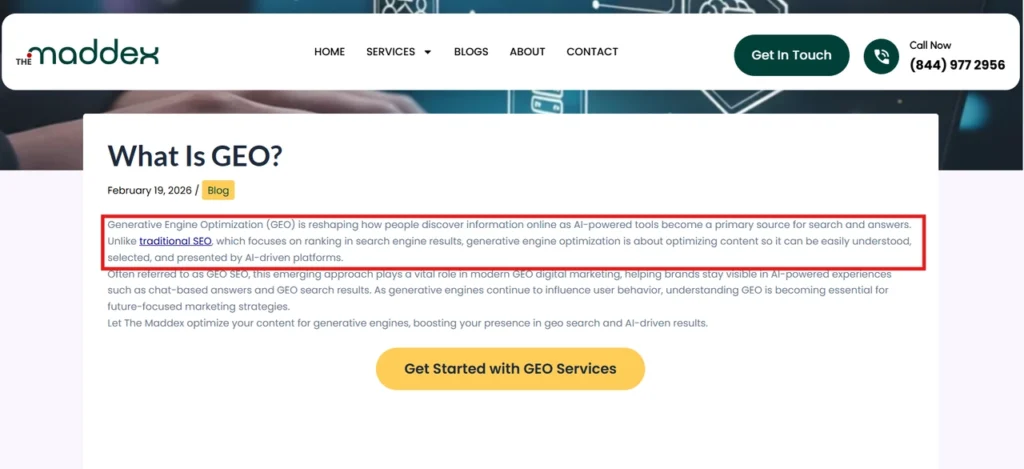
People increasingly interact with AI search engines by asking complete questions rather than typing short keywords. Instead of searching for “SEO tips,” users might ask, “How can I improve my brand visibility in AI search engines?” or “What is the best way to optimize content for AI-generated answers?”
To align with this behavior, create content that directly answers common customer questions in a conversational yet informative manner. Use descriptive headings, concise explanations, and practical examples that address search intent immediately before expanding into greater detail.
Consider incorporating sections that answer questions such as:
- What is AI search visibility?
- How do AI search engines choose sources?
- What is Generative Engine Optimization (GEO)?
- How can businesses improve brand visibility in AI answer engines?
- Why are citations important in AI search?
Comprehensive question-based content improves readability while increasing the likelihood that AI systems will identify your page as a reliable source for conversational responses.
3. Keep Brand Information Consistent Everywhere
Consistent business information across websites, directories, social profiles, and review platforms helps AI systems accurately identify and trust your brand. Maintain the same business name, contact details, service descriptions, and messaging across all online channels. A unified brand presence reduces confusion and strengthens authority signals. Consistent branding, tone, and information also make it easier for AI platforms to associate your content with your business.
4. Build Credibility Through Trusted Brand Mentions
Independent recognition is becoming increasingly valuable in AI-generated search. Rather than relying solely on your own website, AI systems often evaluate how other reputable sources reference your business.
Focus on earning mentions through:
- Industry publications
- Local and national media
- Professional associations
- Research reports
- Guest articles
- High-quality business directories
- Customer review platforms
These references help establish authority beyond traditional backlinks. When multiple trustworthy sources discuss your expertise, AI models gain greater confidence in referencing your content.
5. Establish Authority in Industry Communities
Participating in industry communities, forums, Q&A platforms, webinars, podcasts, and expert discussions helps build trust and expand your brand’s digital presence. Sharing valuable insights instead of promotional content positions your business as a reliable industry expert. These contributions can generate more brand mentions, citations, and authority signals across the web. A strong presence in trusted communities improves credibility for both traditional search engines and AI-powered search platforms.
6. Answer More User Questions with FAQs
Creating detailed FAQs helps AI search engines understand your expertise and provide relevant answers to user queries. Cover common customer questions, comparisons, pricing concerns, and industry topics with clear, valuable responses. Well-optimized FAQs improve your chances of appearing in conversational AI results while building trust with users. Regularly updating FAQ content keeps your information accurate and aligned with changing search behaviors.
How Brands Measure Visibility in AI
Improving brand visibility in AI search is only part of the process. Businesses also need reliable ways to determine whether their optimization efforts are producing measurable results. Monitoring AI visibility helps identify successful strategies, uncover content gaps, and prioritize future improvements.
1. Track Your AI Citation Rate
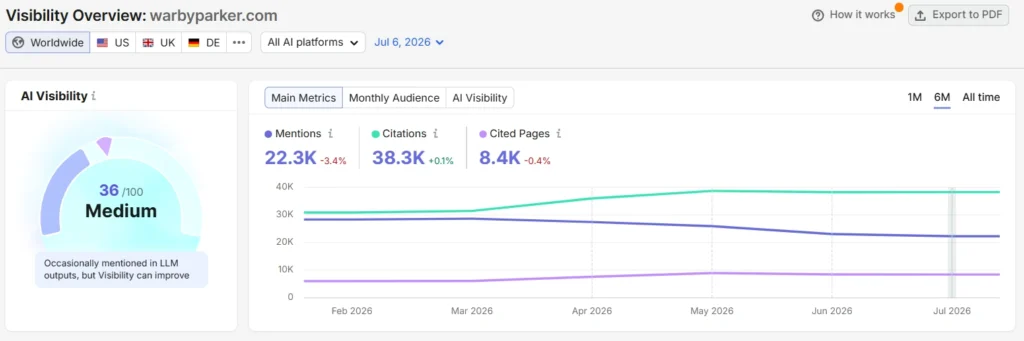
AI citation rate measures how often AI platforms reference your brand in generated answers for relevant queries. Monitor your brand mentions across AI-powered platforms and compare visibility across different search prompts. Tracking citation trends helps identify how effectively your content and authority-building efforts are performing. A higher citation rate often indicates stronger brand credibility and improved AI search visibility.
Use AI visibility and brand monitoring tools like Profound, Peec AI, Semrush AI Visibility Toolkit, Ahrefs, Brand24, and Google Search Console to track citations, mentions, and performance trends across AI-powered search platforms.
2. Track Brand Mentions in AI Responses
In addition to direct citations, monitor how frequently AI platforms mention your company, products, services, or expertise across relevant topics.
Keep a record of:
- Branded queries
- Product-related searches
- Service-related questions
- Industry comparison searches
- Educational searches
Documenting these mentions over time helps you evaluate whether your optimization efforts are increasing your visibility across different AI search environments.
3. Analyze Referral Traffic
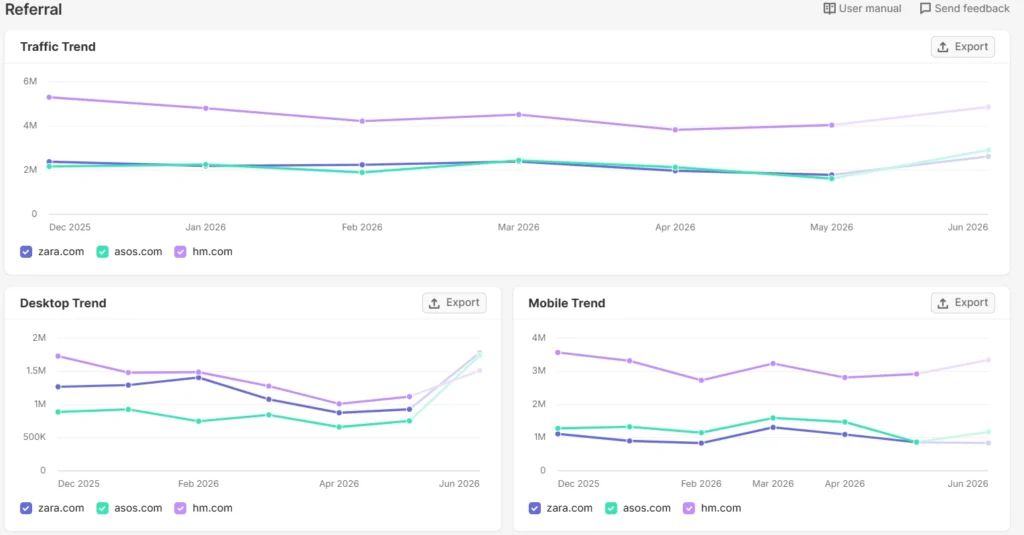
AI visibility should eventually translate into measurable business outcomes. Monitor analytics to identify changes in:
- Organic traffic
- Branded search volume
- Referral traffic
- Time on page
- User engagement
- Lead generation
- Conversion rates
Although not every AI-generated answer produces a website visit, increases in branded searches and engagement often indicate growing awareness generated through AI-powered discovery.
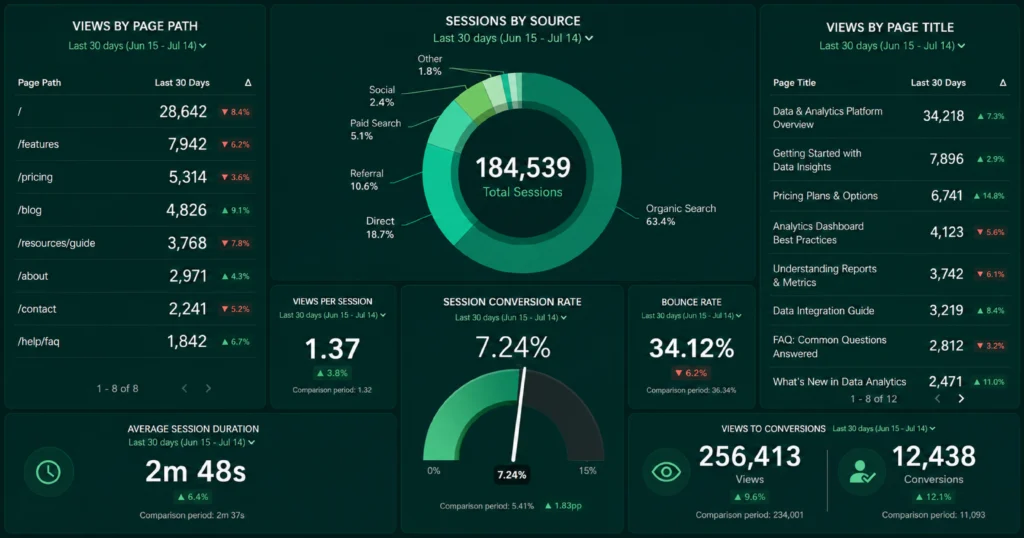
According to Google, users who engage with AI Overviews often continue exploring websites to learn more about topics, highlighting that high-quality content remains important even as search experiences evolve. (Source: Google Search documentation and public AI Overview guidance.)
3. Compare Visibility Against Competitors
Benchmarking competitors helps identify opportunities that might otherwise be overlooked. Compare which brands are consistently referenced for important industry topics and analyze the type of content they publish.
Look for differences in:
- Topic coverage
- Content depth
- Expert contributions
- Backlink profiles
- Industry citations
- Structured data implementation
Competitive analysis reveals where your content strategy may need improvement while highlighting subjects that deserve additional investment.
Why Should You Track AI Brand Visibility?
Tracking AI brand visibility helps businesses adapt to changing AI search trends, identify content gaps, and maintain authority in competitive industries. Monitoring AI responses reveals new opportunities to create valuable content, strengthen topical authority, and support long-term AI-driven discovery.
Regular tracking also helps protect brand accuracy, measure the impact of AI optimization efforts, and evaluate ROI. By analyzing metrics such as citations, brand mentions, traffic, and conversions, businesses can improve their Generative Engine Optimization (GEO) strategy and overall AI search performance.
How to Monitor Brand Visibility in AI
Improving your visibility is only half the process. To understand whether your strategy is working, you need to monitor how AI platforms present your brand over time. Because AI-generated responses change as new information becomes available, regular monitoring helps you identify trends, measure progress, and make informed decisions that strengthen your AI search visibility.
1. Monitor AI Search Platforms Regularly
Regularly test relevant queries across AI platforms like Google AI Overviews, ChatGPT, Microsoft Copilot, Perplexity, and Gemini to track brand mentions. Create a list of industry-specific prompts and monitor how often your brand appears in AI-generated responses. Documenting citations, competitor mentions, and changes over time helps identify optimization opportunities. Consistent monitoring allows businesses to improve their AI search visibility strategy.
2. Use SEO and Brand Monitoring Tools
While manual searches are valuable, combining them with SEO and brand monitoring tools provides a more complete picture of your online presence. These platforms can help you monitor brand mentions, backlinks, keyword performance, sentiment, and referral traffic that may be influenced by AI-generated search experiences.
Useful tools include:
- Google Search Console for organic search performance
- Google Analytics 4 for traffic and engagement metrics
- Ahrefs or Semrush for backlinks, keyword rankings, and competitor analysis
- Brand monitoring platforms for tracking online mentions
- Social listening tools for monitoring conversations about your business
Using multiple data sources allows you to evaluate both traditional SEO performance and emerging trends related to brand visibility in AI search.
3. Create a Brand Visibility Reporting Framework
A structured reporting process makes it easier to measure progress and communicate results with your team or stakeholders. Instead of tracking isolated metrics, build a recurring report that combines AI visibility data with traditional SEO performance.
Your reporting framework can include:
- AI citation frequency
- Brand mentions across AI platforms
- Organic traffic trends
- Branded search growth
- High-performing content
- New backlinks and third-party mentions
- Competitor comparisons
- Content opportunities identified during monitoring
Reviewing these metrics monthly helps you identify successful strategies, uncover weaknesses, and prioritize future content and optimization efforts. Over time, these reports provide valuable insights into how your brand performs across both traditional and AI-powered search environments.
Common Mistakes Affecting Brand Visibility in AI Search
Many businesses struggle with AI search visibility because they overlook important optimization factors. Avoid these common mistakes to improve your chances of being referenced by AI platforms:
- Publishing generic content without original insights, expertise, or real-world experience.
- Ignoring E-E-A-T signals, such as author credibility, accurate information, and trust indicators.
- Neglecting technical SEO elements like schema markup, website structure, and internal linking.
- Failing to earn brand mentions from trusted websites, publications, and industry platforms.
- Keeping outdated content that no longer reflects current information or trends.
- Not monitoring AI citations, brand mentions, and competitor visibility.
- Focusing only on keywords instead of creating helpful content that answers user questions.
Improve Brand Visibility in AI Answer Engines with Maddex
AI-powered search is changing how customers discover businesses, making strong content, E-E-A-T signals, topical authority, and trusted brand mentions essential for long-term visibility. At Maddex, we help businesses develop SEO and AI search optimization strategies that improve authority, strengthen digital presence, and increase visibility across AI-driven search experiences.
Our approach combines content marketing, technical SEO, digital PR, and performance tracking to help brands adapt to evolving search trends. If you want to learn how to improve brand visibility in AI search engines, our team can help create a strategy focused on sustainable growth and long-term results.