Schema markup is one of the most effective ways to help search engines better understand your website and its content. By adding structured data to your pages, businesses can provide search engines with clear information about their services, products, locations, and content. This improves how webpages are interpreted and can increase eligibility for rich results in search.
For businesses investing in SEO or working with a trusted SEO agency Houston, schema markup supports better search visibility, enhanced click-through rates, and improved communication with modern search systems. As search continues to evolve with AI-powered experiences, structured data has become an important part of building a strong SEO foundation and helping search engines understand your website more accurately.
NOTE: This guide is based on practical SEO implementation used in real client projects.
What is Schema Markup
Schema markup is a type of code added to a website that helps search engines understand your content more accurately. Instead of only reading text, search engines can interpret the meaning and context behind each page. This helps Google classify your content properly and display it in more useful ways in search results. It removes ambiguity and improves clarity for search engines. For example, schema can help identify:
- This page represents a service
- This page is a blog article
- This business has a physical location
- This product has a price and availability
- These are real customer reviews
- These are frequently asked questions
Instead of guessing, search engines receive structured meaning that improves clarity and communication. This is especially important for businesses competing in spaces like digital marketing agency Houston, where structured data can help improve visibility and relevance in local search results.
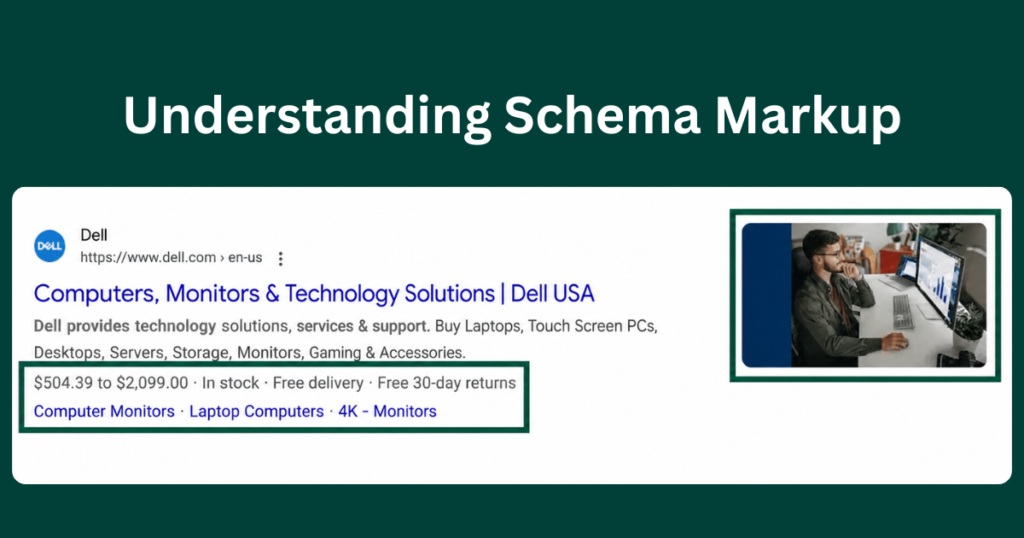
Example of schema markup in action: Google displays structured product details for Dell using rich snippets.
Why Schema Markup Matters for SEO
Schema markup plays an important role in SEO because it improves how search engines interpret your website. It adds structure to your content, making it easier for Google to understand context, relevance, and relationships. This leads to better visibility and more informative search listings for users. It also improves how your website competes in search results. It helps:
- Improve how search engines interpret your pages
- Enhance search listings with additional details
- Increase chances of rich results (ratings, FAQs, etc.)
- Improve click-through rates (CTR)
- Help users understand pages before clicking
- Provide better context for AI and modern search systems
It works alongside strategies like SEO services to improve visibility and performance. Schema markup does not guarantee higher rankings, but it can improve how your website appears in search results and how users interact with it.
For example, compare these two pages ranking for “small microwave under $200” that appear right next to each other in the search results:

How Schema Markup Works
Schema markup works by adding structured meaning to your website’s code so search engines can understand what your content actually represents. Instead of just reading plain text, Google can interpret relationships, intent, and context behind each page. This makes your content more meaningful in search. With schema, search engines understand the deeper meaning:
- The Maddex is a digital marketing agency
- SEO is a service offered
- The website belongs to a business entity
- The business focuses on lead generation and visibility
- The page represents a service offering
This added structure helps search engines match your content with relevant search queries more accurately.
Schema Markup vs Structured Data
Schema markup and structured data are closely related but not the same. Structured data defines how information is organized, while schema markup provides the vocabulary that gives it meaning. Together, they help search engines understand your content in a structured and meaningful way.
Structured Data
Structured data is a standardized format used to organize website information so search engines can read it easily. It removes confusion from unstructured text. It allows search engines to quickly identify key information on a page and process it more efficiently.
Schema Markup
Schema markup is the vocabulary used to label structured data. It tells search engines what each piece of information actually means. Without schema, structured data has no clear context or interpretation.
Simply put:
Structured data is the format. Schema markup is the language.
Types of Schema Markup
Schema markup comes in different types depending on the purpose of the page and the type of business. Each type helps search engines understand specific content more clearly. Choosing the right schema improves how your website appears in search results and enhances relevance.
Local Business Schema
Local Business schema is used for companies that operate in a physical location or serve a specific area. It helps search engines understand key business details. It strengthens your visibility in local search results and Google Maps. It includes:
- Business name
- Address
- Phone number
- Opening hours
- Service area
- Reviews
This is essential for local SEO and visibility.

Service Schema
Service schema is designed for pages that describe business services. It helps search engines clearly understand what you offer and who it is for. It improves relevance in service-based search results. It is best for:
- SEO services
- GEO services
- PPC services
- Web design services
- Content marketing
At The Maddex, service pages like web design and GEO services benefit from this schema for better search clarity.
Article Schema
Article schema is used for blog posts and informational content. It helps search engines identify editorial content and understand its structure. This improves how blog content appears in search results. It is used for:
- SEO guides
- Digital marketing strategies
- Google Ads tutorials
- Content marketing blogs
It should be applied to all blog posts, including this one.
FAQ Schema
FAQ schema is used for pages that contain questions and answers. It helps search engines display FAQs directly in search results. This improves visibility and click-through rates. It is best used for questions like:
- What is schema markup?
- Is schema good for SEO?
- Does schema help rankings?
- Can it be added in WordPress?
Only use it when FAQs are visible on the page.
Product Schema
Product schema is used for e-commerce websites that sell products. It helps display product details directly in search results. This improves product visibility and trust. It includes:
- Price
- Availability
- Ratings
- Product images
Not every business needs this unless selling products online.
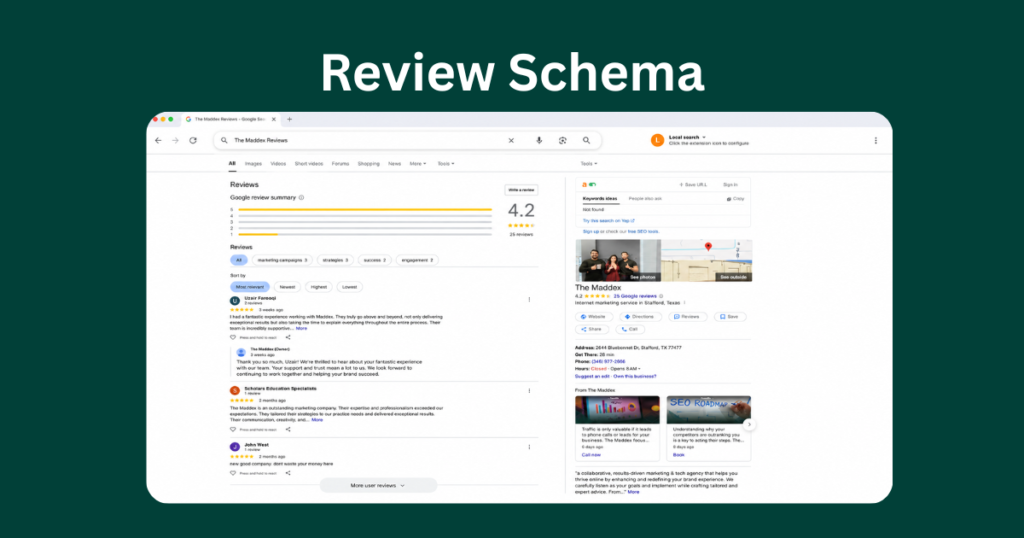
Review Schema
Review schema is used when a page includes genuine customer feedback or testimonials. It helps display ratings in search results. This builds trust before users even click your website. It should only be used when:
- Reviews are authentic
- Reviews are visible on the page
- Content follows Google guidelines
Breadcrumb Schema
Breadcrumb schema helps search engines understand your website structure and navigation path. It improves both SEO structure and user experience in search results. It helps with:
- Site hierarchy clarity
- Better navigation display in SERPs
- Improved internal structure understanding
Benefits of Schema Markup
Schema markup provides several important advantages for SEO and business visibility. It strengthens how search engines interpret your content and improves how users see your pages in search results. It improves both technical SEO and user engagement.
- Better search engine understanding
- Improved search appearance
- Higher chance of rich results
- Increased trust before clicks
- Stronger local SEO performance
- Better service visibility
- Improved content clarity
- Strong technical SEO foundation
For businesses focused on leads and conversions, schema supports the entire SEO ecosystem by making important information easier to interpret.
Does Schema Markup Help You Rank Higher?
Schema markup is not a direct ranking factor. Google still prioritizes content quality, backlinks, page speed, mobile experience, and authority.
However, schema improves how your website appears in search results, which can lead to better visibility and higher click-through rates. This means more users may engage with your website even if rankings stay the same.
Schema Markup Example
<script type=”application/ld+json”>
{
“@context”: “https://schema.org”,
“@type”: “ProfessionalService”,
“name”: “The Maddex”,
“@id”: “https://themaddex.com/#localbusiness”,
“url”: “https://themaddex.com/”,
“telephone”: “(844) 977-2956”,
“address”: {
“@type”: “PostalAddress”,
“streetAddress”: “3944 Bluebonnet Dr”,
“addressLocality”: “Stafford”,
“addressRegion”: “TX”,
“postalCode”: “77477”,
“addressCountry”: “US”
},
“description”: “A digital marketing agency helping businesses grow through SEO, PPC, content marketing, web design, GEO, and lead generation.”
}
</script>
Where Should Schema Markup Be Added?
Schema markup should be added based on the purpose of each page. Different pages require different schema types to reflect their function. This ensures search engines correctly interpret your website structure.
- Homepage: Organization, Website, Local Business
- Service Pages: Service schema, FAQ schema
- Blog Posts: Article schema, Breadcrumb schema
- Contact Page: Local Business, ContactPoint schema
- Testimonials: Review schema (only if compliant)
- GEO Services Page: Service schema + FAQ schema
Schema Markup Mistakes to Avoid
Schema markup is powerful, but only when implemented correctly. Many websites fail because they misuse or overuse schema. Avoiding mistakes ensures your structured data works properly.
- Using incorrect schema types
- Adding schema that doesn’t match page content
- Using fake or misleading reviews
- Copying identical schema across all pages
- Missing required fields
- Not testing schema before publishing
- Treating schema as a replacement for SEO
Schema should always support, not replace, your SEO strategy.
How to Check Schema Markup
Schema markup should always be tested after implementation. This ensures search engines can read and interpret it correctly. Testing helps prevent errors before indexing.
- Google Rich Results Test
- Schema.org Validator
- Google Search Console
Why Schema Markup Matters for the Future of Search
Search is evolving beyond traditional rankings. AI-powered systems now rely heavily on structured information to understand businesses and content.
This is where strategies like GEO services become important. Schema helps organize your website so it can be understood by both search engines and AI systems. It improves how your content is interpreted in modern search environments.
Work with Maddex to Unlock Schema Markup Power
Schema markup helps your website communicate clearly with search engines. It improves understanding, enhances visibility, and supports better search appearances. It does not replace SEO, but it strengthens every part of it.
If you’re ready to take your visibility to the next level and work with a team that understands how to turn structured data into real business growth, Maddex is here to help. As a performance-focused digital marketing agency Houston, we build strategies that improve rankings, drive qualified traffic, and generate more leads through smarter SEO implementation.