
Featured snippets, often called position zero, are the short answer boxes Google displays at the very top of the search results page, above even the first organic listing. Landing one puts your content directly in front of searchers before they scroll past a single blue link, and it does more than just drive clicks. It signals to Google, and increasingly to AI systems pulling from search data, that your page is the most trustworthy and well-structured answer for that query.
Winning a featured snippet is not about luck or guesswork. It comes down to identifying the right opportunities, understanding exactly what format Google is already rewarding for a given query, and structuring your content so it can be lifted cleanly and accurately. This guide breaks down the entire process so you can start capturing position zero for your own content.
What Are Featured Snippets?
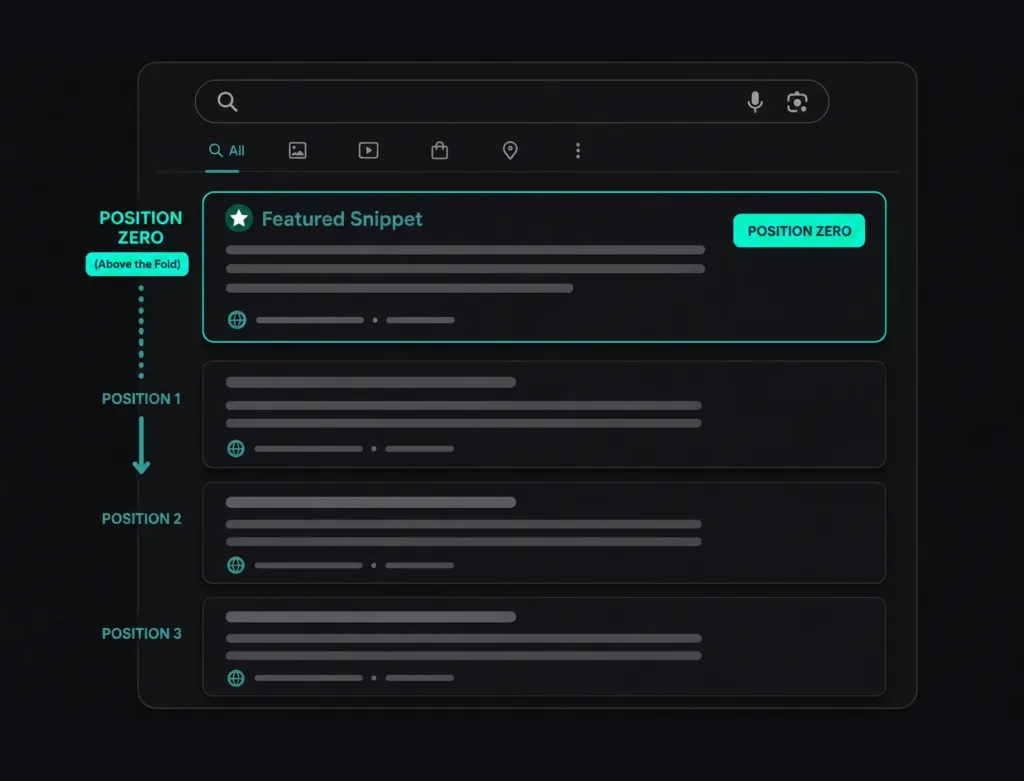
A featured snippet is a short excerpt of content that Google extracts from a page already ranking well and displays prominently at the top of the search results, above the standard organic listings. Google pulls this content automatically rather than requiring any special submission, which means any well-structured page has a real chance at earning one. According to Search Engine Journal, owning a featured snippet is a priority for nearly every SEO professional because of how much visibility and authority it adds to a piece of content.
What Types of Featured Snippets Are There?
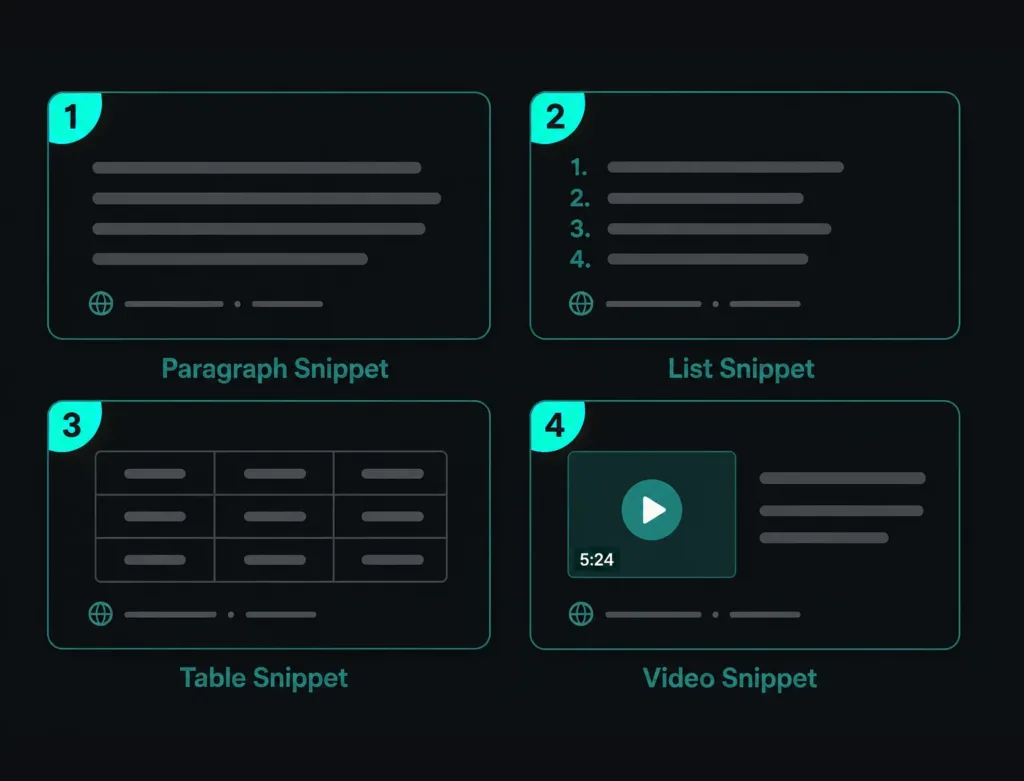
Google displays different snippet formats depending on the nature of the search query, and knowing which type you are targeting determines exactly how you should structure your content.
- Paragraph snippets: Best for definition-style queries like “what is” or “why,” typically pulled from a concise 40- to 60-word answer
- List snippets: Used for step-by-step processes, rankings, or “best ways to” queries, formatted using proper ordered or unordered HTML lists
- Table snippets: Reserved for comparison and data-driven queries such as pricing, specs, or feature comparisons, pulled from clean HTML tables
- Video snippets: Displayed for how-to queries with a strong visual or demonstrative component, showing a thumbnail with a timestamp
How Do You Find Featured Snippet Opportunities?
Not every keyword triggers a featured snippet, and chasing the wrong ones wastes time that could go toward content that actually has a shot at position zero.
- Start with high intent keywords already ranking somewhere in positions 1 through 10, since Google almost always pulls snippets from pages already ranking on page one
- Use a tool like Semrush’s Featured Snippet report or Ahrefs to identify which queries in your niche currently display a snippet
- Prioritize long-tail queries over broad, high-volume terms, since long-tail searches tend to be easier wins with less competition
- Check what your competitors are already winning and study the structure of their content closely, since that intel shows you exactly what Google is rewarding
How Do You Structure Content to Win Featured Snippets?
Once you know which query and snippet type you are targeting, the actual content structure is what determines whether Google chooses your page to extract from.
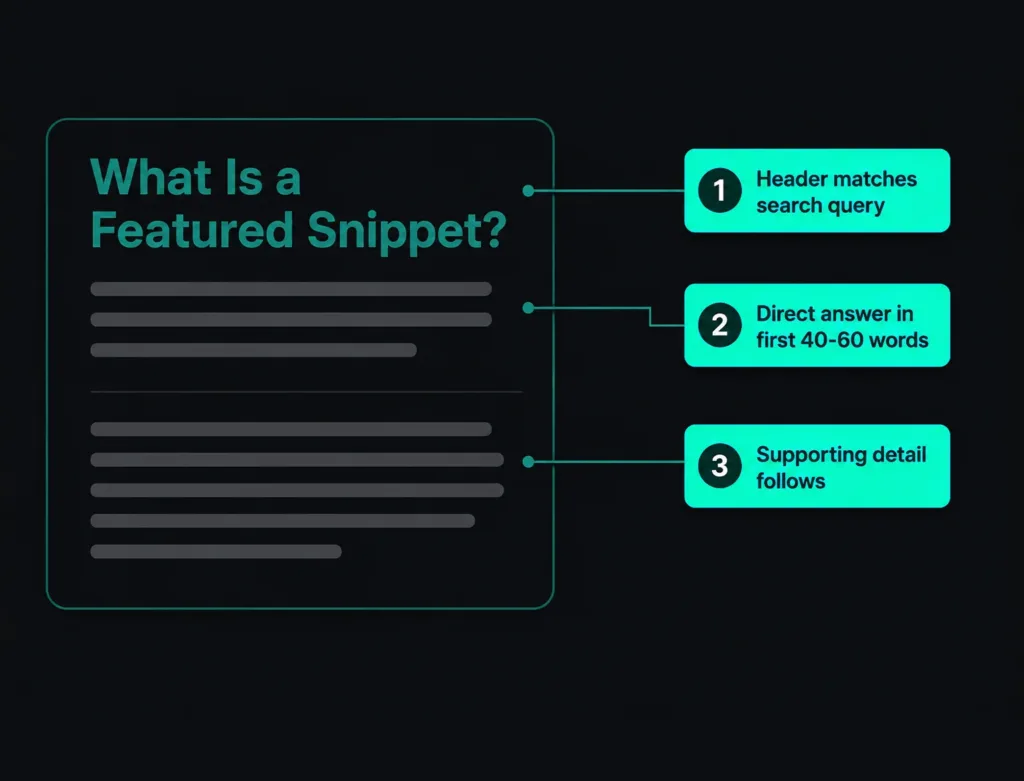
- Lead with a direct, concise answer immediately after a descriptive header that mirrors the exact search query
- Keep paragraph answers between 40 and 60 words, following an inverted pyramid approach where the answer comes first and supporting detail follows
- Use proper HTML list tags for step-based or ranking content, and place the list near the top of the post when the query is clearly list-format
- Build clean, simple HTML tables for comparison queries, keeping the data concise and directly relevant to the search term
- Use header tags strategically, turning common questions into H2s or H3s so both users and Google can navigate the structure easily
This structural approach works hand in hand with solid on-page SEO fundamentals, since a well-optimized page gives Google every reason to trust and extract your content.
What Content Format Works Best for Each Snippet Type?
Matching your content format to the snippet type Google is already displaying for a query dramatically increases your chances of capturing it.
- For definition queries, open with a sentence structured as “[Term] is…” since this format has consistently shown a higher success rate for paragraph snippets
- For process or ranking queries, use 5 to 8 clearly written list items, keeping each one short enough to stand on its own without extra context
- For comparison queries, build tables with clearly labeled columns and rows so Google can extract the exact data being compared
- Avoid opening every list item with the same phrase, since varied and natural language performs better and reads more credibly
Why Do Featured Snippets Matter for SEO?
Featured snippets are more valuable than a typical page one ranking because they place your content above every other result, including paid ads in some cases. Beyond the visibility boost, snippets build brand authority by signaling to both users and Google that your page offers expert, trustworthy information. As AI-generated answers and voice search continue to rely on structured content to generate responses, optimizing for snippets today also prepares your content for how search is evolving. Solid keyword research remains the foundation of this entire process, since you cannot optimize for a snippet opportunity you have not identified in the first place.
Win Position Zero With The Maddex
Capturing featured snippets takes more than good writing; it takes a structured strategy built on real keyword data, competitive research, and content formatted exactly the way Google rewards. At The Maddex, our SEO team specializes in identifying snippet opportunities, restructuring content for maximum extraction potential, and building the technical foundation that supports long-term search visibility. Whether you are chasing your first featured snippet or trying to defend the ones you already own, our approach combines on-page and off-page SEO strategy to get you results that compound over time. Ready to claim position zero? Reach out to The Maddex today and let’s build a strategy that gets your content the visibility it deserves.