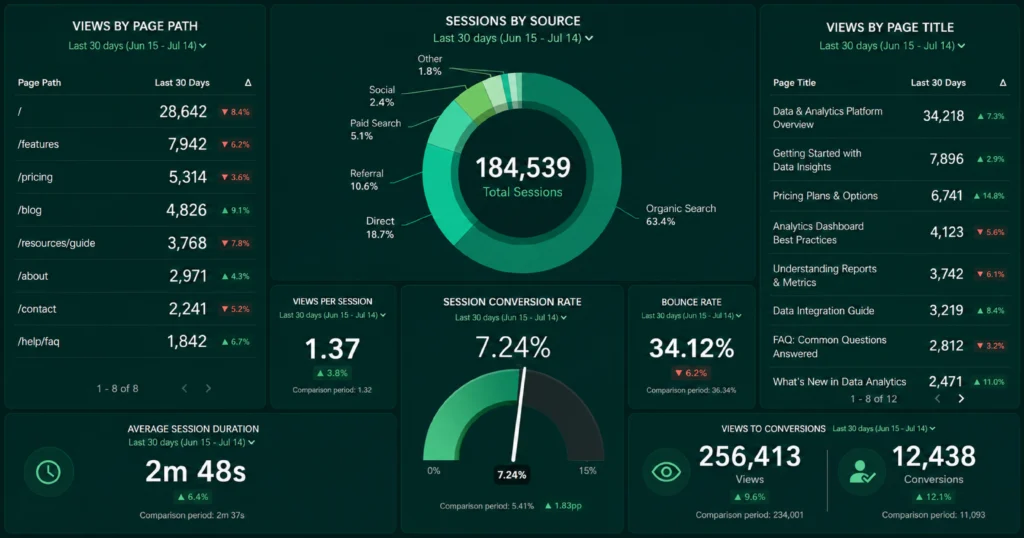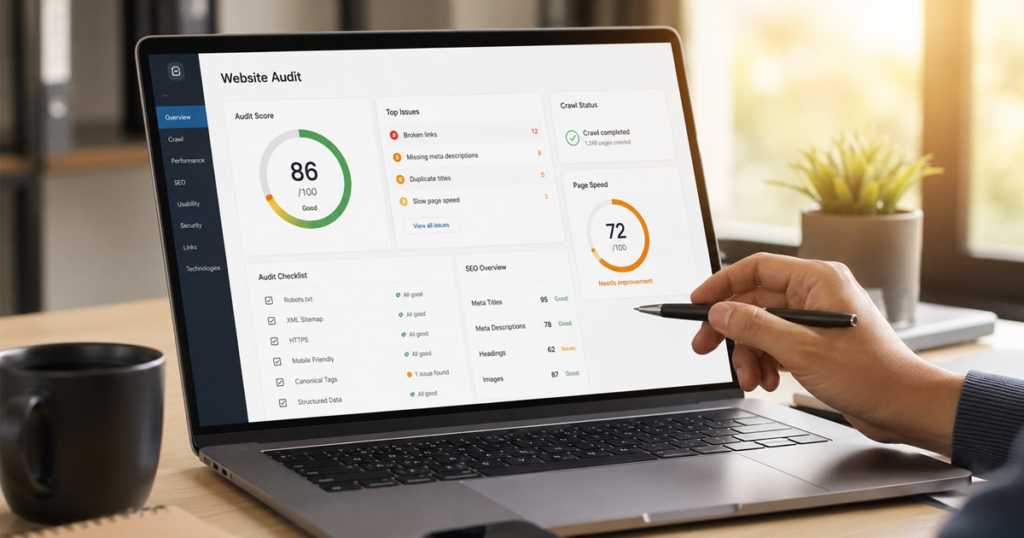
A website audit is a comprehensive evaluation of your website’s performance, SEO health, user experience, and conversion effectiveness. It helps identify issues such as slow page speed, broken links, technical SEO errors, outdated content, and mobile usability problems that may be limiting traffic and growth. Regular audits provide valuable insights into how search engines and users interact with your website, helping you uncover opportunities to improve rankings, engagement, and conversions. For businesses seeking expert guidance, partnering with an SEO agency Houston can help ensure a more in-depth analysis and a clear strategy for long-term digital success.
What Is a Website Audit?
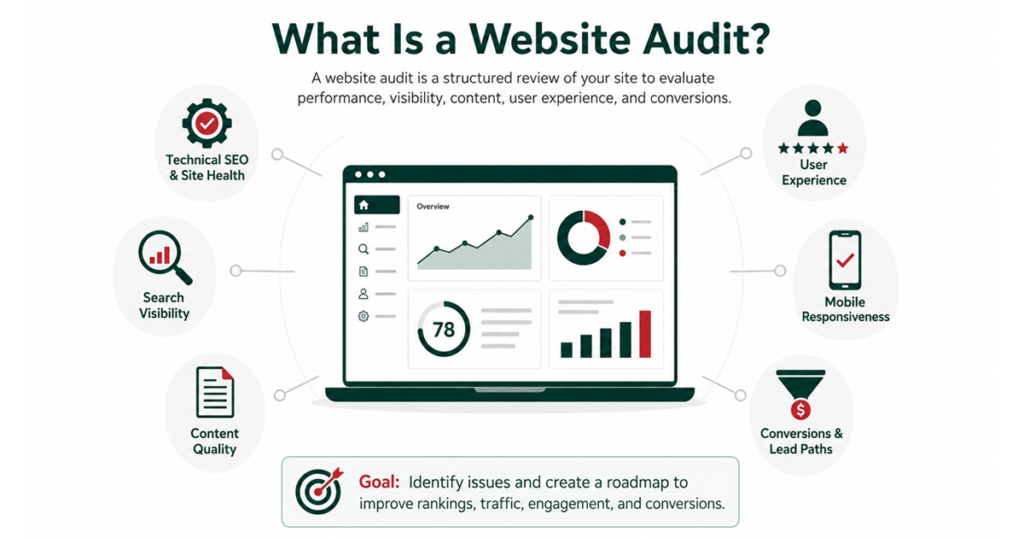
A website audit is a structured evaluation of your website’s technical performance, SEO health, content quality, user experience, and conversion effectiveness. It helps you understand how search engines and visitors interact with your website while identifying the factors that may be limiting growth. Many businesses partner with a digital marketing agency Houston to gain expert insights into website performance and uncover opportunities for improving rankings, traffic, and conversions. A modern website audit typically examines:
- Technical SEO and website health
- Search visibility and keyword performance
- Content quality and topical relevance
- User experience and navigation
- Mobile responsiveness
- Conversion paths and lead generation opportunities
- Website security and trust signals
The goal is not simply to identify issues but to create a clear roadmap for improving visibility, engagement, and business results.
Get your website audited today by our team.
Why Website Audits Matter
Many businesses focus on creating content and driving traffic without realizing that technical and usability issues may be preventing visitors from converting. A website audit helps uncover those obstacles and prioritize improvements based on impact. Benefits of regular website audits include:
- Improving search engine rankings
- Increasing organic traffic
- Enhancing user experience
- Identifying technical SEO issues
- Improving website speed and performance
- Increasing conversions and lead generation
- Strengthening website credibility and trust
A website that performs well technically while providing a strong user experience is more likely to rank higher and generate better business results.
When Should You Perform a Website Audit?
Website audits should be performed regularly as part of ongoing website maintenance and digital marketing efforts. Consider conducting a website audit:
- Before redesigning your website
- After a sudden drop in traffic
- Before launching an SEO campaign
- Following major Google algorithm updates
- When leads or conversions begin declining
- Every three to six months as routine maintenance
Waiting until performance declines often means missed opportunities. Regular audits help businesses stay proactive rather than reactive.
5 Core Website Audit Areas
A comprehensive website audit should evaluate five critical areas that directly influence search visibility and business performance.
1. Technical Website Health
Technical SEO forms the foundation of website performance. Understanding what technical SEO involves can help you identify issues that affect crawlability, indexing, and overall search visibility. Review:
- Website speed
- Core Web Vitals
- Crawl errors
- XML sitemap
- Robots.txt file
- HTTPS security
- Redirect issues
- Broken links
A technical website audit helps identify issues that may prevent search engines from properly crawling, indexing, and ranking your pages. Resolving technical problems creates a stronger foundation for SEO performance and user experience.
2. Search Visibility
Search visibility determines how easily potential customers can find your website through search engines. Analyze:
- Organic traffic trends
- Keyword rankings
- Search impressions
- Click-through rates
- Index coverage
A search visibility audit reveals how effectively your website appears in search results and where opportunities for growth exist. It helps uncover performance trends and prioritize strategies that can increase organic traffic.
3. Content Quality
Content remains one of the strongest ranking factors. Your content should satisfy search intent while demonstrating expertise, authority, and strong topical authority within your industry. Evaluate:
- Thin content
- Duplicate content
- Outdated information
- Keyword targeting
- Topical authority
- Content gaps
A content audit evaluates whether your website content meets user expectations and supports your SEO goals. It highlights areas where content can be improved, expanded, or optimized to strengthen topical authority and engagement.
4. User Experience
A website should make it easy for visitors to find information and complete desired actions. Assess:
- Navigation structure
- Mobile usability
- Readability
- Visual hierarchy
- Internal linking
- Accessibility
A user experience audit examines how easily visitors can navigate and interact with your website. Improving usability and accessibility helps create a more engaging experience that encourages users to stay longer and take action.
5. Conversion Optimization
Traffic alone does not generate revenue. Your website should guide users toward meaningful actions. Review:
- Contact forms
- Call-to-action buttons
- Landing pages
- Lead magnets
- Checkout processes
- User journeys
A conversion optimization audit focuses on how effectively your website turns visitors into leads or customers. By identifying barriers in the user journey, businesses can improve conversion rates and maximize the value of their website traffic.
Website Audit in Steps
A website audit is most effective when approached through a structured process. Rather than focusing on a single issue, you should evaluate technical performance, SEO, content quality, user experience, and conversions together. Following these steps will help you identify weaknesses, prioritize improvements, and create a clear plan for improving your website’s overall performance.
Step 1: Analyze Technical Performance
Start by evaluating your website’s technical foundation. Review page speed, Core Web Vitals, crawlability, indexing status, security settings, and site architecture. Tools commonly used include:
- Google PageSpeed Insights
- GTmetrix
- Google Search Console
- Screaming Frog
A technical performance audit helps uncover issues that may be limiting your website’s visibility, speed, and usability. Addressing these problems early creates a solid foundation for SEO and overall website success.
Step 2: Review Mobile Friendliness
Mobile traffic now accounts for the majority of website visits. A website that performs poorly on mobile devices can lose rankings, traffic, and conversions. Check:
- Responsive design
- Readable text
- Navigation usability
- Form functionality
- Mobile loading speed
A mobile-friendly website ensures visitors can easily browse, interact, and convert regardless of the device they use. Improving mobile performance supports both search rankings and user satisfaction.
Step 3: Evaluate On-Page SEO
On-page SEO helps search engines understand individual pages and their relevance to specific search queries. Review:
- Meta titles
- Meta descriptions
- Heading structure
- URLs
- Internal links
- Image alt text
- Keyword placement
An on-page SEO audit helps ensure each page is properly optimized for search engines and users. Strong on-page optimization improves content relevance, visibility, and overall organic performance.
Step 4: Assess Content Quality
Content should answer user questions clearly while demonstrating expertise and authority. Look for:
- Outdated content
- Missing information
- Duplicate pages
- Weak topical coverage
- Low-performing articles
A content quality audit identifies opportunities to improve accuracy, relevance, and topical coverage. High-quality content strengthens authority, increases engagement, and supports long-term SEO growth.
Step 5: Review User Experience
User experience influences both rankings and conversions. Visitors should be able to navigate your website without friction. Ask:
- Can users find important information quickly?
- Are calls to action visible?
- Is navigation intuitive?
- Does the website look professional and trustworthy?
A user experience audit helps identify obstacles that may frustrate visitors or prevent conversions. Enhancing usability creates a smoother journey that encourages engagement and builds trust.
Step 6: Audit Conversion Paths
Every page should have a clear purpose and next step. Review:
- Contact forms
- Service pages
- Landing pages
- Booking systems
- CTA placement
A conversion path audit evaluates how effectively your website guides users toward desired actions. Optimizing these pathways can improve lead generation, sales, and overall marketing performance.
Step 7: Analyze Analytics and Backlinks
Data provides insight into what is working and what requires improvement. Reviewing your backlink profile can reveal opportunities for stronger link building, referral traffic, and improved search rankings. Review:
- Traffic sources
- Bounce rates
- User behavior
- Conversion rates
- Backlink profile
- Competitor backlinks
An analytics and backlink audit provides valuable insights into website performance and authority. Understanding this data helps uncover growth opportunities and informs more effective SEO strategies.
Step 8: Create an Action Plan
After gathering findings, prioritize issues based on impact. A typical priority order is:
- Critical technical issues
- High-impact SEO fixes
- Conversion improvements
- Content optimization
- Long-term growth initiatives
A structured action plan turns audit findings into measurable improvements. Prioritizing tasks based on impact ensures resources are allocated efficiently and goals are achieved faster.
How Often Should You Audit Your Website?
The frequency of a website audit depends on how often your website is updated, the amount of traffic it receives, and its role in generating leads or sales. Regular audits help identify issues before they affect rankings, user experience, or conversions. By reviewing your website consistently, you can maintain strong performance and support long-term business growth.
- Small Business Websites: Conduct a comprehensive website audit every 6 months to monitor technical health, SEO performance, content quality, and user experience while ensuring no major issues are affecting visibility.
- Active Business Websites: Perform a website audit every 3 months to keep up with content updates, marketing campaigns, technical changes, and evolving search engine requirements.
- Lead Generation Websites: Complete quarterly audits and monthly performance reviews to ensure landing pages, forms, calls-to-action, and conversion paths continue generating qualified leads effectively.
- eCommerce Websites: Carry out monthly reviews and quarterly in-depth audits to monitor product pages, site speed, technical SEO, user experience, and conversion performance across the entire customer journey.
Regular website audits help prevent ranking declines, uncover growth opportunities, and ensure your website continues supporting your business goals effectively.
Fix SEO and Technical Issues with The Maddex
A website audit is often the fastest way to uncover the issues preventing your website from reaching its full potential. From technical SEO errors and slow-loading pages to content gaps and conversion barriers, identifying these issues is the first step toward improving rankings, traffic, and lead generation.
At Maddex, we provide comprehensive website audits that evaluate technical performance, SEO health, content quality, user experience, and conversion opportunities. Our team delivers clear recommendations and actionable insights that help businesses improve visibility, increase conversions, and build a stronger foundation for long-term digital growth.