
As Google integrates AI into search, businesses must adapt their content strategies to remain visible. Learning how to optimize content for Google AI Overviews is becoming essential as these AI-generated summaries highlight trusted sources and simplify complex information for users.
According to Google, clicks from AI Overview results tend to be higher quality, with users spending more time on the site. Businesses looking to stay competitive can benefit from working with Houston seo services that understand how to structure content for AI-driven search and maximize online visibility.
What Are Google AI Overviews?
Google AI Overviews are AI-generated summaries that appear at the top of Google’s search results, providing quick answers by combining information from multiple trusted sources. Instead of only displaying traditional blue-link results, Google analyzes web content and presents a concise explanation with links to relevant pages.
Why AI Overviews Change the SEO Game?
Google AI Overviews are reshaping search by generating AI summaries from multiple trusted sources, making it important for businesses to optimize content for Google AI Overviews. Instead of relying only on traditional rankings, Google now prioritizes content that clearly answers user queries and is easy for AI systems to understand.
Marketers must learn how to optimize for AI Overviews by creating clear, well-structured, and authoritative content that matches search intent. Research by Ahrefs shows AI Overviews can reduce clicks to traditional organic results by about 34.5%. However, Sundar Pichai, CEO of Google, has stated that links included within AI Overviews often receive higher click-through rates, highlighting the value of being cited in these summaries.
Core Factors That Influence Google AI Overviews
To optimize content for Google AI Overviews, it’s important to understand the key signals Google uses when selecting sources for AI-generated summaries. These signals help Google determine which pages are trustworthy, relevant, and easy for AI systems to understand. If you want to learn how to get into Google AI Overview for SEO, focusing on the following factors is essential.
1. Experience, Expertise, Authoritativeness, Trustworthiness (E-E-A-T)
E-E-A-T is one of the most important quality frameworks Google uses to evaluate content. Since AI Overviews summarize information from credible sources, pages that demonstrate real expertise and trust are more likely to be referenced.
Ways to strengthen E-E-A-T include:
- Author bios and credentials showing industry expertise
- Citations from reputable sources such as research studies or official data
- Case studies and real-world examples that demonstrate experience
- Clear company information and contact details to build trust
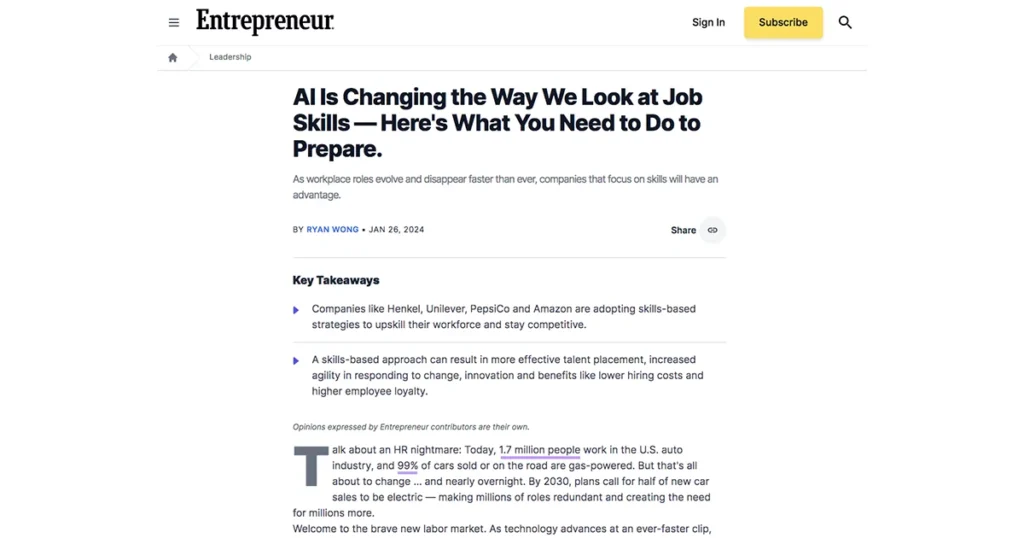
For example, a blog explaining SEO strategies written by a verified SEO professional with case studies and references is far more likely to be considered reliable by Google’s AI systems. Below is an example showing how references, sources, and author information are included in a blog post for credibility.
2. Structured Content & Schema Markup
Clear structure helps Google’s AI quickly extract and understand key information. When content is organized with headings, lists, and structured data, it becomes easier for AI systems to summarize it. Using schema markup also helps search engines interpret your content more accurately.
- Article Schema – helps Google understand blog posts and guides
- FAQ Schema – highlights question-and-answer sections
- HowTo Schema – useful for step-by-step instructional content
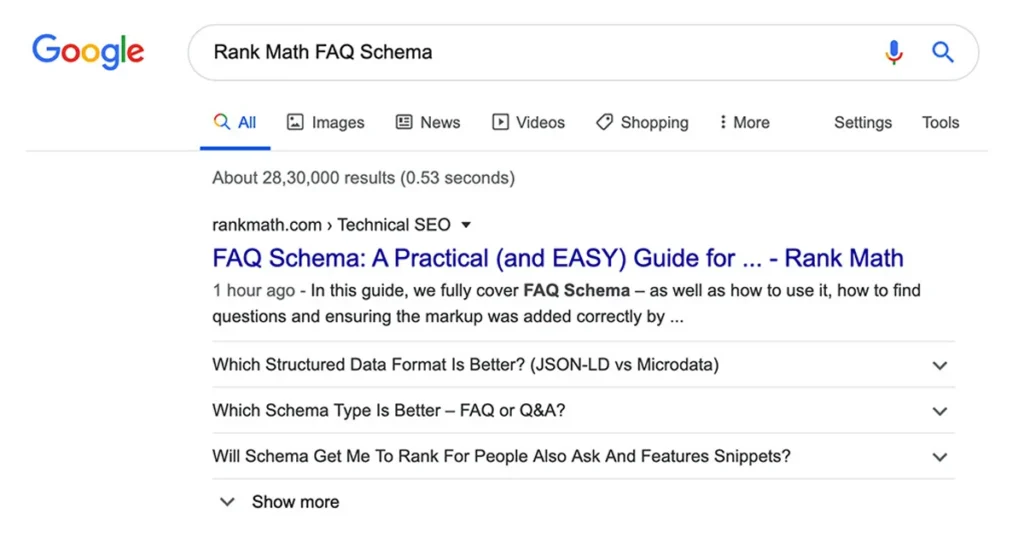
Combining structured headings (H2, H3) with schema markup improves the chances that Google can easily pull your information into AI Overviews. Below is an example of a FAQ schema taken from RankMath, showing how structured data can be added effectively.
3. Relevance to Search Intent
Content must directly match what users are searching for. AI Overviews often prioritize pages that answer specific questions and long-tail queries.
For example:
Generic Content
“SEO tips for websites.”
Contextual Content
“How to optimize content for Google AI Overviews in 2026.”
The second example clearly aligns with search intent and provides context that AI systems can easily interpret.
4. Technical Accessibility
Even high-quality content won’t appear in AI Overviews if search engines cannot properly access or understand it. Technical SEO ensures your content is discoverable and usable for both search engines and AI systems.
- Ensure pages are crawlable and indexable
- Use semantic HTML with proper heading structure
- Maintain fast page load speeds
- Avoid blocked resources in robots.txt
- Use clean internal linking to help Google navigate your site
By combining strong E-E-A-T signals, structured content, clear intent, and technical SEO, you boost your chances of appearing in AI-generated results. At The Maddex, we optimize your content for Google AI Overviews. If you are searching for Digital Marketing Agency Near Me, call us today at (844) 977-2956 or get a free quote now to get started and improve your visibility in AI-driven search.
Strategies for Optimizing Content for Google AI Overviews
To optimize content for Google AI Overviews, businesses need to focus on creating helpful, structured, and technically accessible content that AI systems can easily understand and summarize. Google’s official guidance emphasizes that the same principles that work for traditional SEO, helpful content, strong page experience, and technical accessibility are also essential for success in AI-driven search.
Below are the most effective strategies to follow if you want to understand how to optimize for AI Overviews and improve your chances of being cited in these AI-generated summaries.
1. Focus on Unique, Helpful Content
Google recommends prioritizing people-first content that provides unique value, rather than writing solely for search engines. Content that answers user questions clearly and provides original insights is more likely to be selected for AI summaries.
Best practices:
- Provide clear, direct answers to common questions.
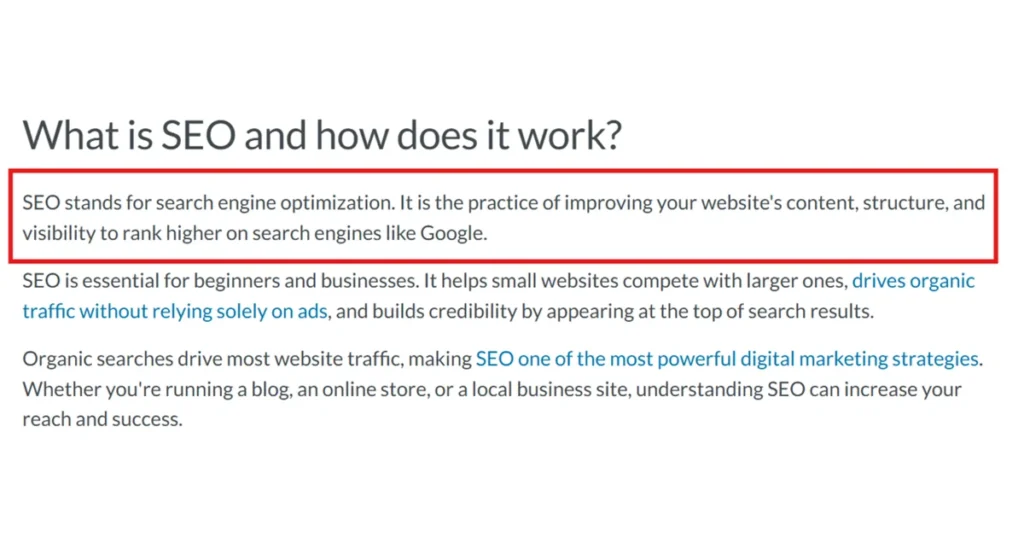
- Include original insights, examples, or expert commentary.
- Avoid generic or duplicated information that already exists everywhere online.
AI Overviews often respond to longer and more complex queries, so content that explains topics thoroughly has a better chance of being referenced.
Related: Overcoming Poor Content Quality
2. Structure Content
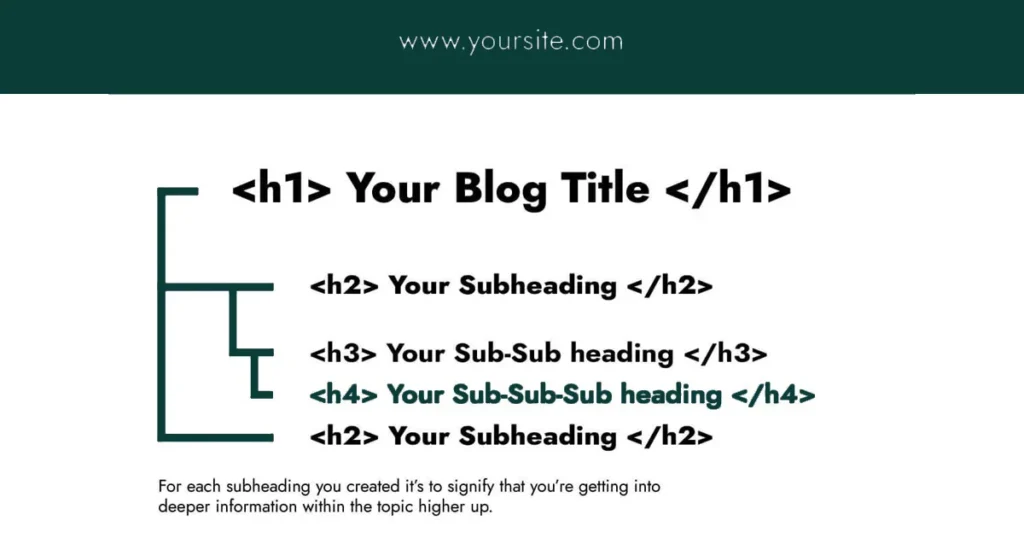
AI systems prefer content that is well organized and easy to scan. Structured content helps Google quickly identify the most relevant information for summarization.
Ways to structure content effectively:
- Use clear H2 and H3 headings
- Include bullet points and numbered lists
- Provide short answer paragraphs (40–70 words) for key questions
- Add FAQ sections that address related queries
When your content is structured logically, it becomes easier for Google’s AI to extract relevant information and include it in AI-generated responses.
Read more: Content Optimization Techniques for SEO Success
3. Use Schema Markup
Schema markup helps search engines better understand the context of your content, making it easier for Google to interpret and display it across search features. Google recommends ensuring that structured data accurately reflects the visible content on your page.
Common schema types that support AI search include Article schema for blog posts and guides, FAQ schema for question-and-answer sections, and HowTo schema for step-by-step tutorials. Implementing the right structured data improves how search engines process your content and increases the chances of it being used in AI-driven results.
4. Improve Page Experience
Even high-quality content may perform poorly if the page experience is weak. Google recommends ensuring pages are fast, mobile-friendly, and easy to navigate. Elements like fast loading speeds, clear separation between main content and ads, and simple, readable formatting help users quickly find information. A strong page experience improves engagement and supports better visibility in search features.
5. Ensure Your Content Is Crawlable and Indexable
Technical SEO remains critical for AI search visibility. Google must be able to discover, crawl, and index your pages before they can appear in any search feature, including AI Overviews.
- Ensure pages return HTTP 200 status codes
- Avoid blocking important pages in robots.txt
- Allow Googlebot to access your content
- Maintain a clear internal linking structure
Without proper technical accessibility, even high-quality content will not be considered for AI results.
6. Add Multimedia for Multimodal Search
Google’s AI search supports multimodal queries, where users combine text with images or other inputs. Because of this, content should include high-quality visuals along with text. Adding relevant images, descriptive alt text, and videos for tutorials or explanations helps search engines better understand your content and improves its chances of appearing across different AI-driven search formats.
7. Optimize for Engagement, Not Just Clicks
Google has observed that visits coming from AI Overviews often result in higher-quality engagement, with users spending more time on the site. Instead of focusing only on traffic numbers, measure:
- Conversions
- Time on page
- Newsletter sign-ups
- Product inquiries
These engagement signals indicate that your content is genuinely helpful.
Get Professional SEO Services with The Maddex
In today’s AI-driven search landscape, optimizing content for Google AI Overviews is essential for visibility and engagement. At The Maddex, we create high-quality, structured, and authoritative content that increases your chances of being featured in AI summaries and helps your business stand out in search results.
We are a leading digital marketing agency Houston specializing in SEO, content marketing, and local search. At The Maddex, we implement authority-building content, structured data, and technical SEO strategies to boost traffic, improve engagement, and deliver measurable results in AI-powered search. Call us today at (844) 977-2956 to get started.