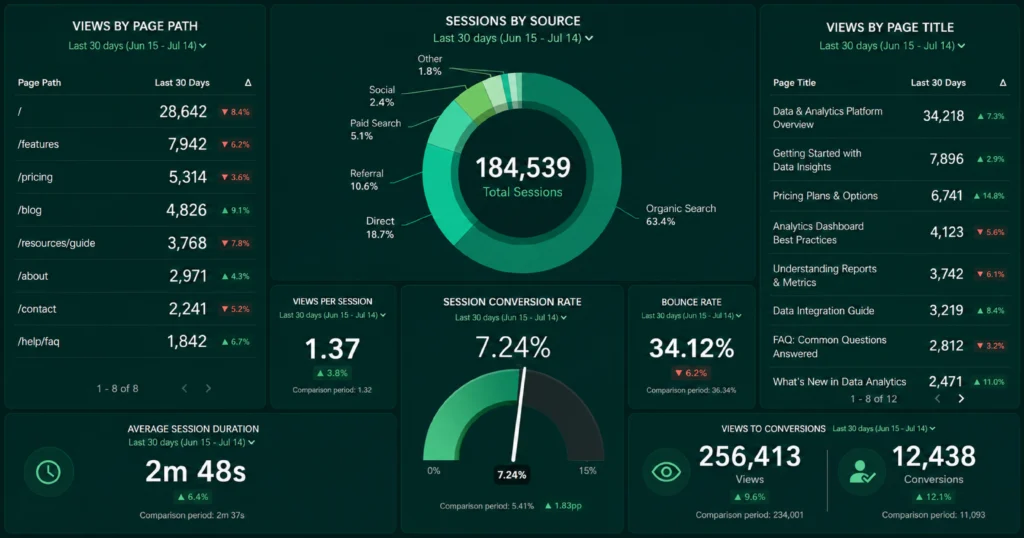
Understanding what keywords your site ranks for is essential to building a strong SEO strategy and improving your online visibility. By analyzing your keyword rankings, you can discover exactly which search terms are driving traffic to your website and how well your pages are performing in search results. Knowing your Google keyword site position helps you identify opportunities to optimize existing content, target new keywords, and stay ahead of competitors.
In this blog, we’ll break down why knowing your ranking keywords is important, how to find what keywords a website is ranking for, and how to analyze them properly to boost your overall search performance. Whether you handle SEO in-house or are looking for professional SEO services, knowing your keyword performance is the first step to driving meaningful results.
Why Knowing Your Ranking Keywords Is Important
Knowing which keywords your website already ranks for gives you a clear picture of how users are finding your business online. These ranking keywords reveal what search engines associate your content with, helping you understand whether your SEO efforts are aligned with your goals.
When you track keyword performance, you can identify high-potential terms that are close to page one, optimize underperforming pages, and strengthen content that’s already bringing in traffic.
Most importantly, understanding your ranking keywords allows you to make data-driven decisions, improve visibility, and focus your SEO strategy on what actually works.
How to Find What Keywords a Website Is Ranking For
Understanding your keyword rankings helps you measure SEO performance and identify opportunities to grow organic traffic. Below are the most effective ways to find keyword rank, track your Google keyword site position, and see which search terms your website is already visible for.
1. Use Google Search Console
Google Search Console is the most reliable free tool to find keyword rank because the data comes directly from Google. In the Performance → Search Results report, you can see the exact queries your site appears for, along with impressions, clicks, CTR, and average position. This makes it easy to analyze your current keyword rankings and understand your real Google keyword site position for each search term.
2. Use SEO Tools
SEO tools provide deeper insights into keyword performance and competitor rankings. Platforms like Ahrefs, SEMrush, Moz, and Ubersuggest allow you to enter your domain and instantly find keyword rank across hundreds or thousands of search terms.
These tools also show estimated traffic, ranking history, SERP features, and competitors, helping you track changes in keyword rankings and improve your Google keyword site position over time.
3. Use Google Analytics
While Google Analytics doesn’t show exact keyword rankings, it still offers valuable indirect insights. By reviewing organic landing pages and user behavior, you can identify which pages attract search traffic and then match them with keyword data from Search Console or SEO tools. This combined approach helps you better understand your keyword rankings and refine your strategy to improve overall Google keyword site position.
How to Analyze Keyword Rankings Properly?
Analyzing keyword rankings goes beyond simply checking positions in Google. To get real value from your data, you need to understand what those rankings mean and how they impact traffic and conversions.
Start by grouping keywords based on search intent, informational, navigational, or transactional, to see whether your content matches what users are looking for. Next, focus on keywords ranking in positions 5–20, as these often represent quick-win opportunities where small optimizations can lead to significant traffic gains.
Pay close attention to average position trends over time rather than daily fluctuations, since consistent upward movement signals effective SEO efforts.
Also, evaluate rankings alongside click-through rate (CTR), impressions, and landing page performance. A high ranking with low CTR may indicate weak titles or meta descriptions, while strong engagement from lower-ranked keywords can highlight content worth further optimization. Finally, compare your rankings against competitors to spot gaps and opportunities, ensuring your strategy is data-driven and aligned with long-term SEO growth.
How Often Should You Check Keyword Rankings?
How frequently you check keyword rankings depends on your SEO goals and how competitive your industry is. For most websites, reviewing keyword rankings once a week is enough to track performance without overreacting to normal search engine fluctuations. Daily checks can create unnecessary noise, as rankings often change slightly from day to day.
If you’re actively publishing new content, running SEO campaigns, or optimizing important pages, a weekly or biweekly review helps you spot trends early and measure the impact of your efforts. For long-term SEO health and reporting, a monthly analysis is ideal to evaluate progress, identify winning keywords, and adjust your strategy based on consistent data rather than short-term changes.
Common Mistakes to Avoid When Checking Keyword Rankings
Tracking keyword rankings is essential for SEO, but misreading the data can lead to poor decisions. Here are some common mistakes to avoid when checking keyword rankings and how to fix them.
- Focusing only on page-one rankings: Many site owners ignore keywords that rank beyond the first page. This is a mistake, as keywords ranking between positions 8–20 often present quick optimization opportunities that can drive meaningful traffic with minimal effort.
- Checking rankings too frequently: Daily rank checks can cause unnecessary panic due to normal search fluctuations. Instead of reacting to every change, focus on weekly or monthly trends to understand real performance shifts.
- Ignoring search intent and traffic value: A higher ranking doesn’t always mean better results. Some keywords may rank well but drive little traffic or the wrong audience. Always evaluate rankings alongside search intent, impressions, and conversions.
- Not tracking rankings by location or device: Keyword rankings can vary based on geography and whether users search on mobile or desktop. Failing to account for this can give you an inaccurate view of your true search visibility.
- Relying on a single tool: Different tools calculate rankings differently. Depending on only one platform can skew your insights. Combining data from Google Search Console and SEO tools provides a more accurate picture.
- Overlooking SERP features: Featured snippets, local packs, and AI-generated results can push organic listings down even if your ranking hasn’t changed. Always consider how SERP features impact visibility and click-through rates.
Avoiding these mistakes helps you interpret keyword ranking data correctly and make smarter, data-driven SEO decisions.
Take Control of Your Keyword Rankings with The Maddex
Understanding what keywords my site ranks for is just the first step; acting on that data is what drives real results. At The Maddex, we specialize in boosting your keyword rankings with tailored SEO strategies that put your website ahead of the competition. Don’t just track your rankings, improve them, and watch your traffic and conversions grow.
Partner with The Maddex today at (844) 977 2956 and turn your keyword insights into measurable success.